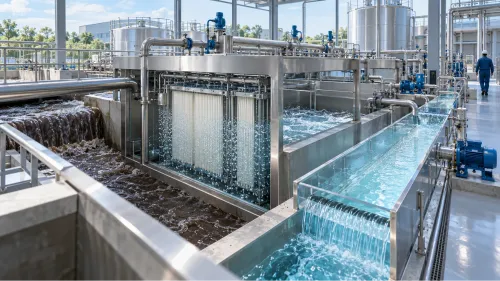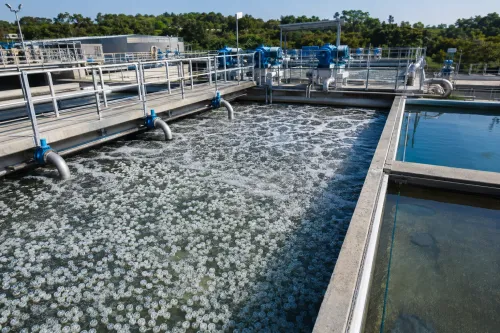


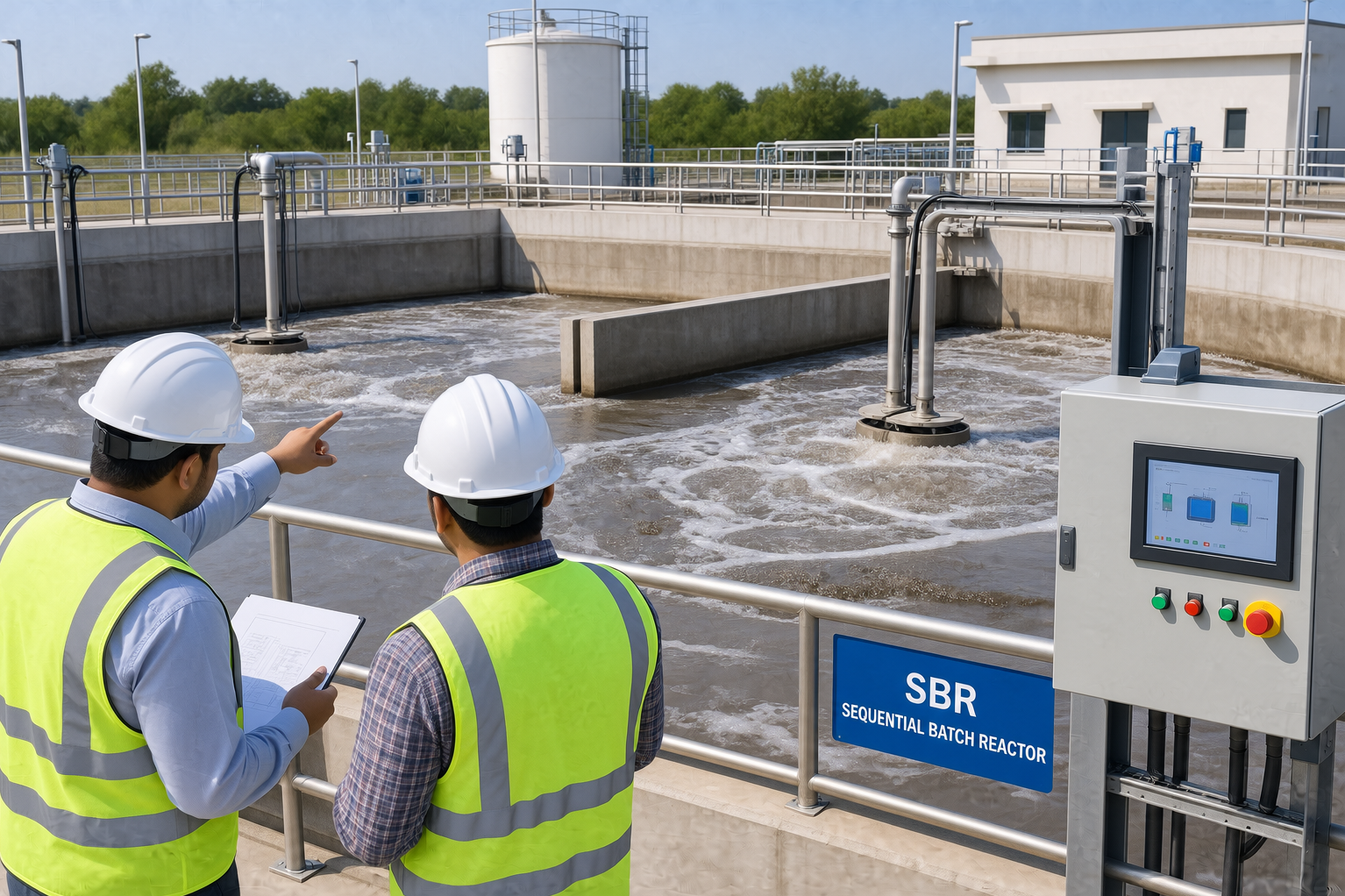
An SBR Sequential Batch Reactor treats wastewater through a series of biological treatment stages carried out within the same reactor. Instead of maintaining continuous flow through separate biological and settling tanks, an SBR operates according to timed cycles.
This operating principle can make the technology useful for certain sewage and wastewater treatment applications.
Understanding the SBR Cycle
A typical SBR cycle may include:
Fill: Wastewater enters the reactor.
React: Aeration supports biological treatment.
Settle: Aeration stops, allowing solids to settle.
Decant: Treated water is removed without disturbing settled sludge.
Idle: The reactor prepares for the next treatment cycle.
The exact cycle duration and operating sequence depend on wastewater characteristics and treatment requirements.
Why Automation Matters
Timing is fundamental to SBR performance.
Aeration, filling, settling, and decanting must occur in a controlled sequence. Automated valves, pumps, blowers, sensors, decanters, and control panels may therefore play important roles.
Poor control can interfere with settling or lead to inconsistent effluent quality.
Check Flow Patterns Before Choosing SBR
SBR works in batches, while wastewater generation may occur continuously.
The overall design must therefore account for incoming flow while reactors are in settling or decanting phases.
Multiple basins, equalization, or suitable storage arrangements may be necessary depending on plant capacity and flow variation.
Evaluate These Factors
Before selecting an SBR, consider:
- Average wastewater flow
- Peak flow
- Organic loading
- Available space
- Required treated-water quality
- Automation reliability
- Power availability
- Operator capability
- Sludge management
- Future expansion
This prevents technology selection from being based only on plant capacity.
Is SBR Suitable for Water Reuse?
SBR can provide effective biological treatment when properly designed and operated. However, intended reuse may require additional treatment after the biological stage.
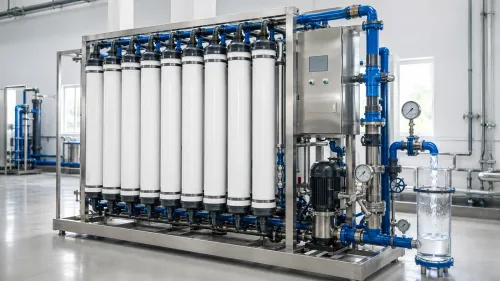
Filtration and disinfection, for example, can form part of the tertiary treatment process depending on required water quality.
Maintenance Should Be Planned Early
Automated components require preventive maintenance.
Decanters, actuated valves, level sensors, blowers, pumps, control panels, and instrumentation should be accessible for inspection and servicing.
A treatment plant that performs well technically but is difficult to maintain can create long-term operational problems.
For Bangalore facilities comparing biological treatment options, Daksha Greentech can evaluate SBR in relation to wastewater characteristics, available footprint, reuse objectives, and operational requirements.
The right decision depends on whether the batch-treatment approach fits the property's wastewater generation pattern and maintenance capabilities. Technology should follow the site requirements, not the other way around.