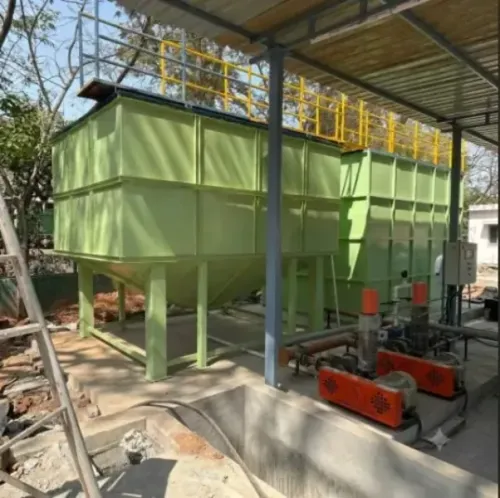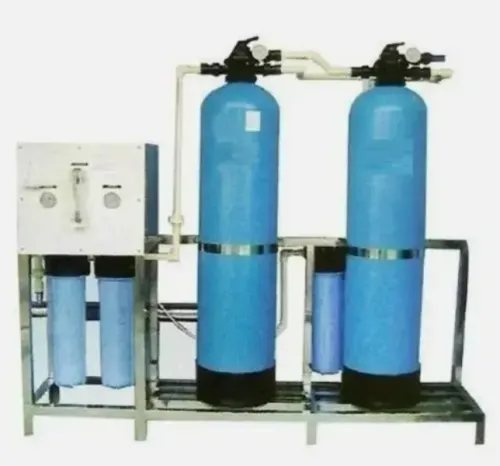
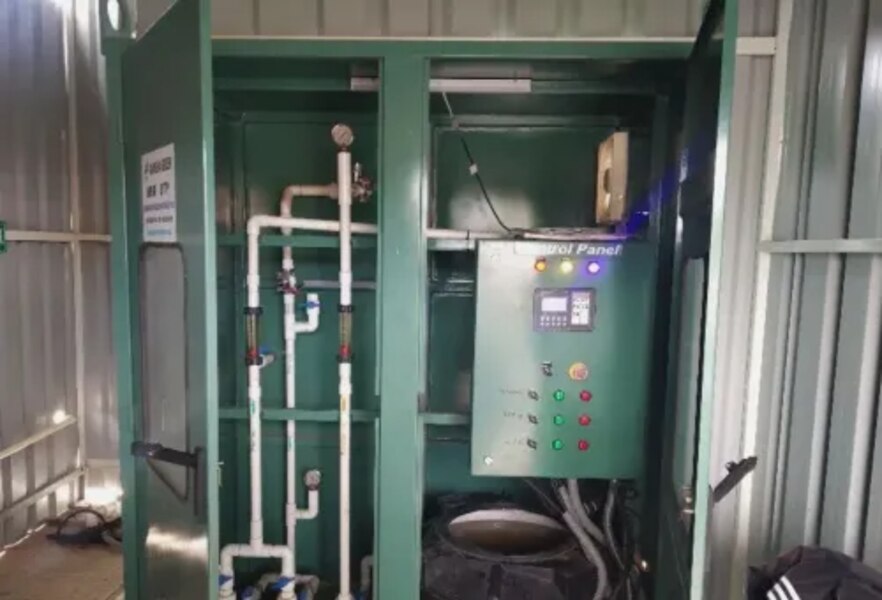
Choosing an MBR plant in Bengaluru requires more than matching a quoted KLD number to your premises. You need to connect sewage flow, inlet pollution, reuse quality, footprint, redundancy, sludge handling and lifecycle cost before comparing suppliers. By the end, you will have a practical brief for sizing the plant and evaluating bids.
Key takeaways
- Size the plant from measured daily flow and peak hourly flow, not building occupancy alone.
- Specify inlet BOD, COD, TSS, oil and grease, pH and ammonia results.
- Demand treated-water limits, sampling methods, membrane flux and cleaning responsibilities in writing.
- Compare lifecycle cost, reject-water handling, spares and local service response—not equipment price alone.
How an MBR plant treats sewage from inlet to reuse tank
An MBR sewage treatment plant combines biological treatment with membrane filtration, so the membrane replaces the secondary clarifier. Sewage first passes through coarse and fine screens that remove rags, hair and plastics, then through grit and grease removal; provide a bypass, screen opening, screenings wash or disposal point, and safe access for cleaning.
Equalisation smooths intermittent commercial flows before biological treatment. In the aeration tank, microorganisms consume dissolved and particulate pollutants while blowers supply oxygen. Include mixers, dissolved-oxygen control and a duty-standby aeration arrangement.
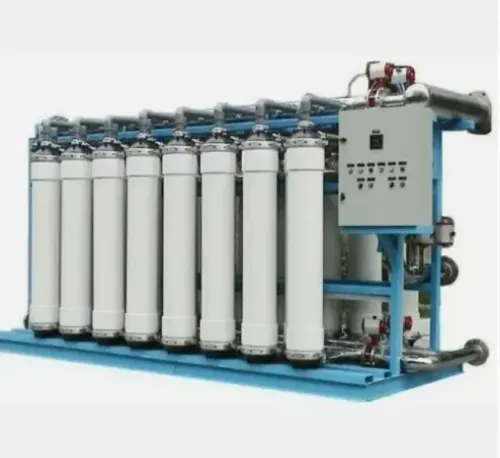
Membrane modules then separate biomass from treated water through microfiltration or ultrafiltration. Air scouring limits fouling, but increases power use. Permeate pumps transfer the filtered water to disinfection, such as ultraviolet or chlorination, and then to a reuse tank.
| Stage | What the operator must control | Residual waste or risk |
|---|---|---|
| Inlet works | Screen, remove grit and grease; prevent bypass to membranes | Screenings, grit, grease and odour |
| Biology | Maintain oxygen, mixed-liquor concentration and sludge age | Waste activated sludge |
| Membranes | Track transmembrane pressure, flux and cleaning intervals | Spent cleaning solution and fouling waste |
| Disinfection and storage | Verify residual or UV performance and prevent tank recontamination | Off-specification water requiring re-treatment |
For a commercial MBR STP, specify duty and standby membrane trains, blowers, permeate pumps, instruments and control power. Make the consent conditions and reuse-water limits contractual acceptance criteria; MBR technology alone does not establish discharge compliance. Include sludge dewatering, licensed disposal, chemical storage, washwater drainage and power backup in the design.
MBR versus MBBR, SBR and conventional treatment in Bengaluru
Choose MBR when a Bengaluru facility needs high-quality reuse water from limited space and can fund higher energy use and closer maintenance. It is not automatically the best choice for every sewage flow.
| Process | Footprint and flow variation | Treated-water quality and reuse | Power and operator attention |
|---|---|---|---|
| MBR | Smallest process footprint; equalisation still protects membranes from peaks | Low suspended solids and strong biodegradable-organic removal; add disinfection for reuse | Highest power demand from aeration, membrane scouring and permeate pumping; requires cleaning and instrument monitoring |
| MBBR | Larger than MBR because it needs a secondary clarifier; handles load variation well with equalisation | Good biological treatment; filtration and disinfection may be needed for reliable flushing or gardening reuse | Moderate power; clarifier, sludge return and media retention need attention |
| SBR | Compact, but batch cycles need timed filling and treated-water storage; poor scheduling causes overflow or bypass | Good treatment when cycles are completed; quality varies if peak inflow disrupts settling | Moderate-to-high controls attention; operators must manage cycles, decanting and sludge wasting |
| Conventional activated sludge | Largest footprint because it needs aeration, clarification and often tertiary treatment | Can meet discharge or reuse targets after polishing | Lower membrane-related cost, but more tanks and sludge-settling checks |
MBR does not remove dissolved salts or hardness. Add reverse osmosis when the reuse specification demands low-TDS water; add disinfection before storage or distribution.
Specify equalisation, duty-and-standby blowers, pumps, membrane trains and control power. Compare guaranteed outlet limits against the project’s Karnataka consent conditions, not against the process name alone.
How to size a 10 KLD or 25 KLD MBR plant correctly
10 KLD means 10,000 litres per day, or 0.417 m³/h averaged across 24 hours. 25 KLD means 25,000 litres per day, or 1.042 m³/h. These figures describe daily volume, not the peak flow the membranes and pumps must handle.
1. Measure at least seven days of sewage flow, including the busiest occupancy period. Record average daily flow, maximum hourly flow, occupied hours, weekends, holidays and seasonal shutdowns.
2. Convert the readings into two design inputs: average daily volume and peak hourly inflow. Check BOD, COD, TSS, fats, oils and grease, and industrial chemicals separately; a 25 KLD plant with unusually strong sewage may need more biological volume than a dilute 25 KLD stream.
3. Compare the inflow profile with the biological process feed rate. If a hostel, office, school or commercial building discharges heavily for only a few hours, size an equalisation tank to receive that surge and feed the MBR steadily.
Calculate its working volume from the measured hourly inflow minus the selected feed rate, then add usable operating margin.
4. Specify duty and standby membrane trains, permeate pumps, blowers, instruments and control power. A single failed train can turn a nominal 25 KLD plant into a much smaller usable plant.
The mbr sewage treatment plant cost is meaningful only after these flows, loads, equalisation volume, reuse target, civil work, automation, backup power and O&M scope are fixed. Make the supplier state guaranteed flow and treated-water limits in the quotation.
What inlet tests and treated-water guarantees should you specify
Specify the inlet load and the end use before asking for a guarantee. Test composite sewage for pH, BOD, COD, TSS, TDS, oil and grease, ammonia, total nitrogen, total phosphorus, chloride, sulphate and faecal coliforms; record peak flow and any cleaning chemicals entering the drain.
Screen opening, grit removal and grease handling must appear in the specification.
- Toilet flushing: guarantee BOD ≤10 mg/L, TSS ≤10 mg/L, turbidity ≤2 NTU and E. coli below the project’s hygiene limit, with disinfection and a covered reuse tank.
- Gardening and vehicle washing: use the same limits, then set a faecal-coliform target and verify that salinity will not damage soil, paint or equipment.
- Cooling-tower makeup: do not accept an MBR-only promise. Specify TDS, hardness, alkalinity, silica, chloride and conductivity targets; add ultrafiltration or reverse osmosis when the cooling-water supplier requires them.
- Discharge: write the exact limits from the site’s current consent and receiving route into the acceptance test, rather than assuming MBR compliance.
- Packaged drinking water: MBR effluent is not packaged drinking water. Require a separate potable-water train, validated disinfection and compliance with IS 14543 before bottling.
| End use | Core written targets | Extra verification |
|---|---|---|
| Flushing, gardening, washing | BOD, TSS, turbidity, E. coli | Residual disinfectant and storage hygiene |
| Cooling makeup | TDS, hardness, alkalinity, silica, chloride | RO recovery and reject handling |
| Discharge | Consent-specified parameters | Independent commissioning sample |
Compare bids on these guarantees, not just “mbr stp price in bengaluru”; price changes with polishing, instruments, civil work and O&M.
How to compare an MBR supplier’s quotation and service capability
Reject any quotation that gives only a lump-sum price and a KLD rating. A meaningful comparison requires defined flow, influent BOD, COD, TSS and ammonia loads, reuse target, civil scope, electrical work, installation, taxes, commissioning and the included O&M period.
| Bid item | Demand in writing | Why it matters |
|---|---|---|
| Price and scope | Separate tanks, screens, membranes, blowers, pumps, panels, instruments, civil works, installation and taxes | Two 25 KLD plants can have very different installed costs |
| Guarantee | State flow, load, permeate TSS, BOD, COD, ammonia and disinfection target, with test method and acceptance period | MBR technology alone does not guarantee compliance |
| Redundancy | Identify duty/standby pumps, blowers, membrane trains, power backup and bypass arrangements | One failed component should not stop treatment |
| Cleaning and parts | Give chemical names, cleaning frequency, storage requirements, membrane module model and replacement lead time | Cleaning chemicals and imported modules can become operating bottlenecks |
| Support | Specify breakdown response time, preventive visits, operator training, logs and annual O&M exclusions | A cheap plant becomes expensive when expertise arrives late |
Make compliance contractual: attach the current consent conditions and the limits for discharge or reuse, rather than accepting “as per norms.” Add a spare-parts schedule covering membranes, air diffusers, sensors, seals and dosing pumps.
For an mbr sewage treatment for plant supplier in bengaluru, ask for local service coverage without treating proximity as proof of performance. Daksha Greentech International should be compared using this same documented schedule, as should every membrane bioreactor supplier in bengaluru.
Related products
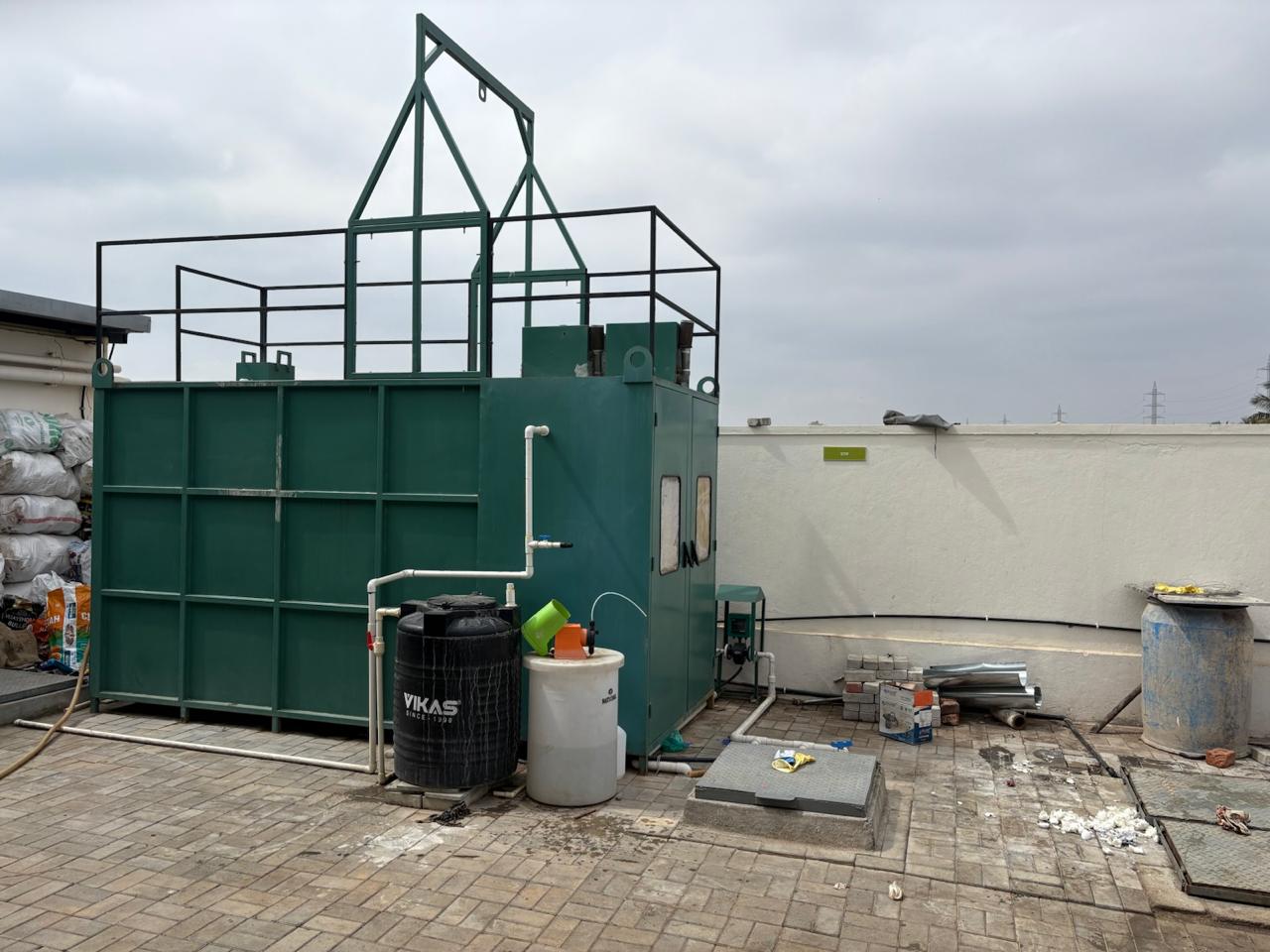 | MBR Sewage Treatment Plant The MBR Sewage Treatment Plant (Membrane Bioreactor) is an advanced wastewater treatment system designed to efficiently treat domestic and municipal... View product → |
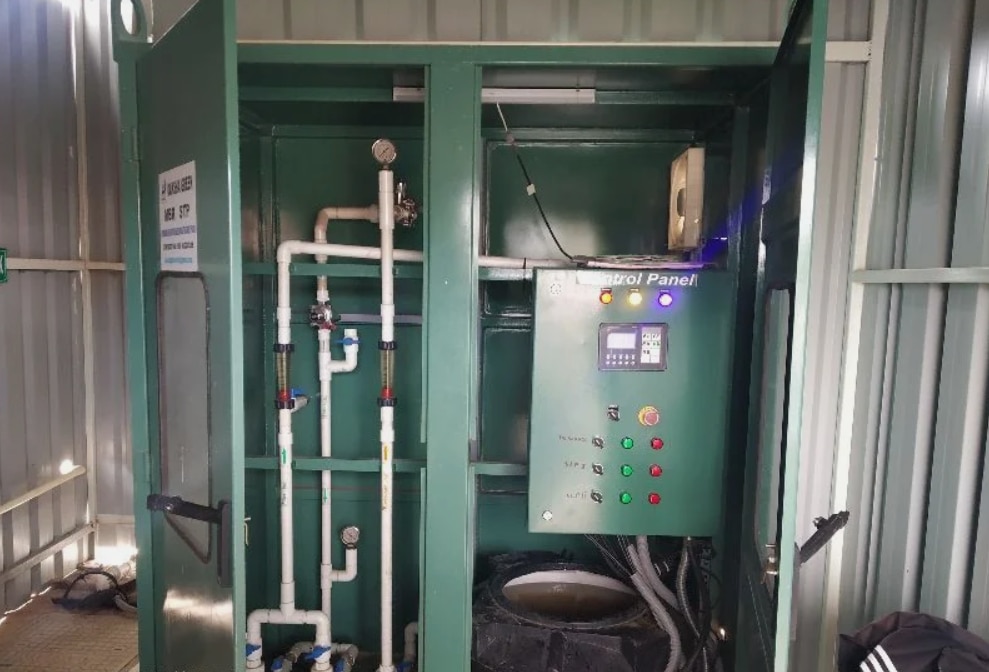 | 25 KLD MBR Sewage Treatment Plant 25 KLD MBR Sewage Treatment Plant DAKSHA GREENTECH INTERNATIONAL offers a highly efficient 25 KLD MBR (Membrane Bioreactor) Sewage Treatment Plant designed to provide advanced and... View product → |
Frequently asked questions
How does an MBR sewage treatment plant treat sewage from inlet to reuse tank?
Screens remove rags and plastics, grit and grease removal protects equipment, biological aeration breaks down pollutants, and membranes separate treated water from biomass before disinfection and storage.
What is the difference between MBR, MBBR, SBR and conventional treatment in Bengaluru?
MBR combines biological treatment with membrane separation and uses less space. MBBR uses attached-growth media and a clarifier, SBR treats batches in timed cycles, and conventional systems use separate biological and clarification stages.
How do you size a 10 KLD or 25 KLD MBR plant correctly?
Use measured average and peak flows, operating hours, inlet pollutant loads, equalisation volume, membrane capacity, sludge production and the required reuse schedule. Do not size from KLD alone.
Which inlet tests and treated-water guarantees should you specify?
Request representative tests for flow, pH, BOD, COD, TSS, oil and grease, ammonia and temperature. Put outlet limits, test methods, sampling points, operating conditions and responsibility for laboratory testing in the quotation.
How should you compare an MBR supplier’s quotation and service capability?
Compare process design, membrane area and type, blower and pump redundancy, controls, civil scope, commissioning, operator training, consumables, membrane cleaning, warranty, spares and Bengaluru service response.
Related product
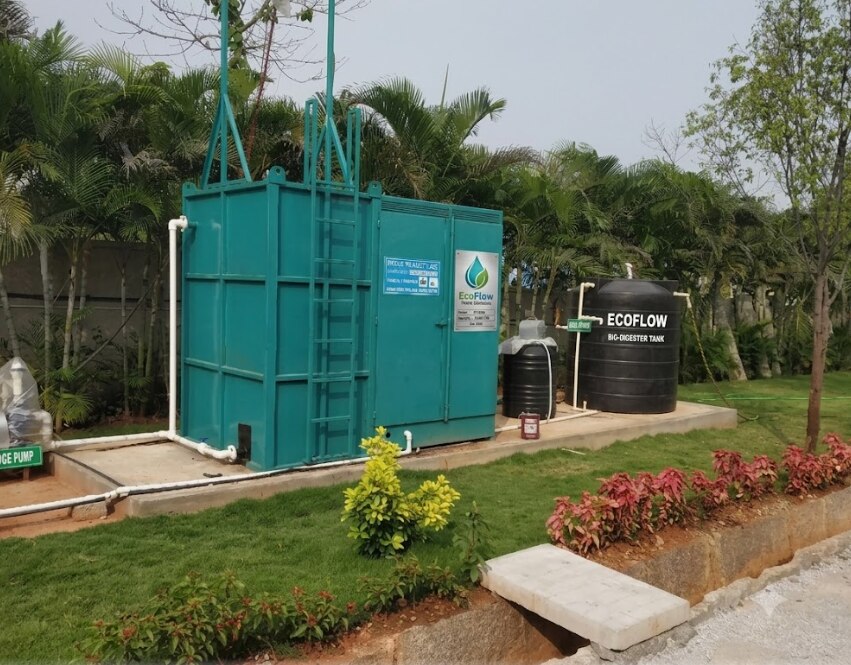 | 10 KLD MBR Sewage Treatment Plant 10 KLD MBR Sewage Treatment Plant DAKSHA GREENTECH INTERNATIONAL is a trusted Manufacturer, Supplier, and Trader of 10 KLD MBR Sewage Treatment Plants, offering advanced and efficient... View product → |
Keywords