A realistic Bengaluru project budget must separate treatment machinery from bottling equipment, civil work, approvals, utilities, testing, and working capital. By the end, you can convert litres-per-hour into saleable bottles, identify missing quote items, and decide whether to build, scale down, or use contract packing.
Key takeaways
- Price the production format and capacity before comparing RO skids.
- Require treatment, filling, packing, utilities and installation in every quote.
- Test the source water before fixing plant design or equipment.
- Ask suppliers for approvals, quality records and commissioning responsibilities.
What does a packaged drinking water plant cost in Bengaluru?
A realistic packaged drinking water plant price in bengaluru starts with the production format and capacity, not the RO skid alone. The following are machinery-only planning bands, not advertised quotations:
| Capacity | Indicative machinery-only range | Typical scope |
|---|---|---|
| 2,000 litres per hour | ₹25–45 lakh | Small semi-automatic line |
| 5,000 litres per hour | ₹45–80 lakh | Medium line |
| 10,000 litres per hour | ₹70 lakh–₹1.5 crore | Larger line |
A complete packaged drinking water plant in bengaluru needs four cost categories:
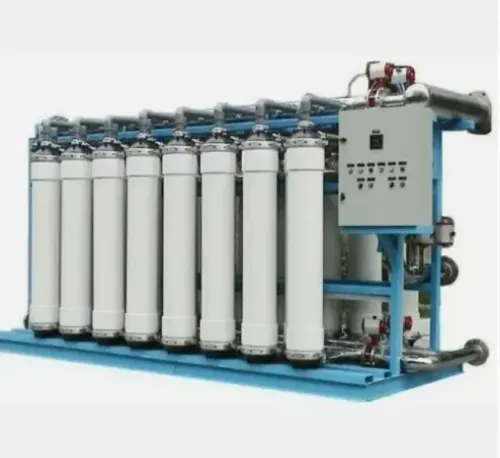
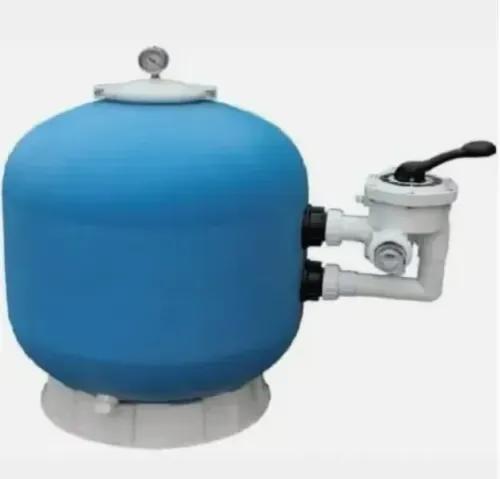
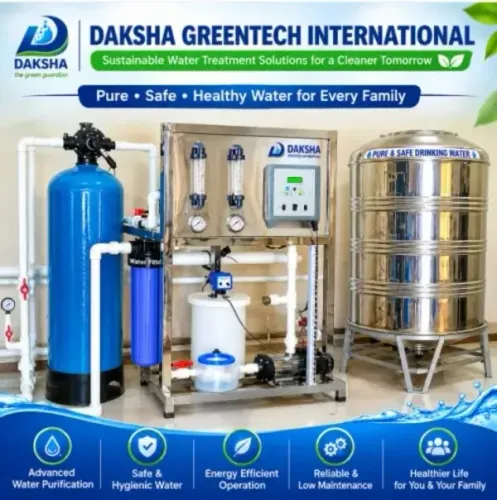
- Treatment: source-water testing, raw-water tanks, multimedia or sand filtration, activated carbon, cartridge filters, high-pressure pumps, RO, UV or ozone, mineral dosing and finished-water storage.
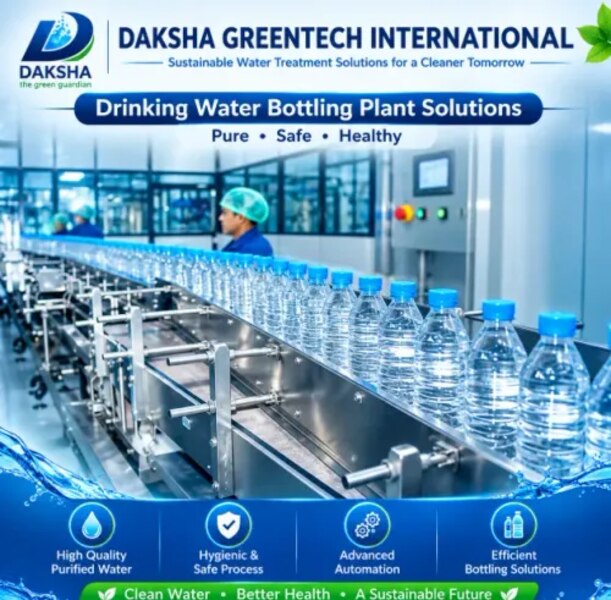
- Packaging: bottle or jar rinsing, filling, capping, conveyors, batch coding, labelling, shrink wrapping, cap handling and secondary packing.
- Site: civil construction, washable production rooms, drainage, electrical panels, installation, commissioning, freight, GST and utility connections.
- Operating: laboratory setup, statutory work, consumables, packaging inventory, maintenance and working capital.
Bottle blowing, generator capacity, delivery vehicles, land, building work and approval-related expenses can push the project well beyond machinery pricing. A 500-ml PET line also needs faster filling, packing and distribution, while a 20-litre jar line needs washing, inspection, return collection and delivery logistics. Therefore, equal RO capacity does not make the two formats comparable.
Ask for a line-item quotation with exclusions before treating any price as a project budget.
What equipment and production capacity should the quote include?
A treatment-only quote stops at treated water; a complete line continues to saleable, packed product. Demand a line-item bill of materials and battery-limit drawing for the packaged drinking water plant equipment, including installation and excluded items.
- Raw-water storage; pressure sand or multimedia filter; activated-carbon filter; cartridge filters; high-pressure pump; RO membranes; UV unit or ozone generator; SS316 contact tank; hygienic product-water tank.
- Rinser, filler, capper, cap elevator, conveyors, batch coder, labeller, shrink tunnel and secondary packing.
Define capacity in litres per hour and bottles or jars per hour, alongside container size, operating hours, saleable output, peak demand and line efficiency. A 2,000 LPH RO system produces 2,000 LPH of permeate, not 2,000 LPH of saleable product: at 50–70% recovery, feed demand is roughly 2,860–4,000 LPH before backwash, CIP and startup losses.
Require reject-water volume, recovery, connected electrical load, compressed-air needs, drainage, floor space and utility connection points. For a bottled water plant setup in Bengaluru, also specify whether the quote includes compressor, chiller, CIP and laboratory equipment.
| Option | Main trade-off | Check before choosing |
|---|---|---|
| Semi-automatic | Lower equipment cost, more labour | Bottle output and staffing |
| Automatic | Higher cost, steadier output | Peak demand and line efficiency |
| Purchased bottles | Simpler site, ongoing bottle cost | Supplier reliability and storage |
| In-house PET blowing | More control, added compressor and power | Preform, mould and maintenance cost |
| Single-use PET | Faster distribution, packaging waste | Bottle and packing cost |
| Reusable jars | Washing and return logistics | Rinser capacity and breakage |
| Single-pass RO | Lower capital, lower recovery | Feed quality and reject volume |
| Two-pass RO | Higher purity, power and maintenance | Product specification and water analysis |
How do water source and Bengaluru site conditions change the design?
Two plants rated at 5,000 litres per hour can receive different prices because the treatment train, storage, civil work and utilities follow the source and site—not the label on the RO skid.
For packaged water plant requirements, obtain a source-water report covering pH, TDS, turbidity, hardness, alkalinity, iron, manganese, chloride, sulphate, nitrate, fluoride, microbiology, and relevant heavy metals, pesticides or radiological parameters.
| Source | Design and cost effect |
|---|---|
| Borewell | Variable hardness, iron, nitrate or fluoride can require extra pretreatment, lower recovery and larger storage. A test report does not prove groundwater-extraction rights. |
| Municipal supply | More reliable quality can reduce treatment duty, but interruptions require storage and tanker backup. |
| Tanker water | Uncertain quality and delivery schedules increase testing, storage, pumping and operating costs. |
| Surface water | Seasonal turbidity and microbiological loads demand stronger pretreatment, disinfection and larger reliability margins. |
A bottled water plant setup in Bengaluru must also test urban power reliability, limited floor area, tanker dependence, summer demand, loading access and delivery radius. Price drainage and reject-water reuse or disposal before accepting the quotation.
Include these site requirements:
- Washable food-production rooms, hygienic zoning, ventilation, fire safety, changing rooms and handwashing facilities.
- Separate raw- and finished-water tanks, floor drains, and physical separation between untreated and finished water.
- Controlled storage for bottles, caps and labels, with adequate access for loading and delivery.
- For reusable 20-litre jars, add washing, inspection, rejection and return logistics; these are separate requirements from one-way PET.
Which approvals, records and quality controls belong in the project?
Equipment alone does not complete a packaged water project: approvals, records and quality controls must be specified before commissioning. Define the product correctly. Packaged drinking water is separate from natural mineral water under BIS IS 13428, while a packaged drinking water plant in Bengaluru should use IS 14543 and the current FSSAI testing scheme.
BIS conformity and FSSAI licensing are separate checks. Verify current forms, fees and inspection steps with FSSAI, BIS, Legal Metrology, Karnataka State Pollution Control Board, the groundwater authority and local authorities before finalising packaged water plant requirements. A borewell report does not prove extraction rights.
Confirm these label fields before printing:
- Product name, net quantity, manufacturer or packer details, batch or lot code, packing date and best-before information
- Treatment or disinfection declarations where required, consumer-care details and packaged-commodity information
- Plastic-packaging extended-producer-responsibility obligations where the packaging model triggers them
A quality plan must define source-water and finished-water testing, microbiological release, retention samples, calibration, sanitation verification, packaging-material inspection and corrective action. Keep source reports, treatment-flow diagrams, cleaning SOPs, batch records, test reports, calibration records and maintenance logs.
| Control | Record or physical provision | Failure prevented |
|---|---|---|
| Ozone | Off-gas destruction, ventilation and residual-ozone checks | Worker exposure and overdosing |
| UV | Intensity or dose monitoring with lamp records | Undetected disinfection loss |
| Chemicals | Current SDSs, labelled storage and protective equipment | Unsafe handling |
Include worker training, chemical ventilation and access to an approved external laboratory for tests unavailable in-house.
How should you compare suppliers and decide whether to build?
Reject any quote that gives only a packaged drinking water plant price in Bengaluru without a battery-limit drawing and line-by-line inclusion and exclusion schedule. Require treatment, bottling, lab instruments, CIP, compressor, chiller, electrical panel, installation, freight, commissioning, training and spare parts to appear as separate lines.
Ask the supplier to state membrane and component brands, recovery assumptions, warranty boundaries, preventive-maintenance intervals, consumables pricing, response times, operator-training deliverables and local spare availability. Acceptance tests must cover treated-water quality, rated flow, filling accuracy, leakage, coding, reject rate, noise and electrical safety.
Compare the investment with contract packing before approving a bottled water plant setup in Bengaluru.
| Option | Compare this | Proceed when |
|---|---|---|
| Build plant | Capital, laboratory, compliance, operators and maintenance | Demand is proven and source rights, premises and funding are ready |
| Contract packing | Per-unit cost, minimum batches, transport and brand control | Demand is uncertain or commissioning risk matters |
| Delay or redesign | Source permission, drainage, layout and testing gaps | The site cannot support compliant operation |
Separate procurement, site survey, water testing, layout, approvals, installation, trial batches, licence work, training and routine operation into workstreams. Do not accept one “turnkey completion” date that hides dependencies.
Treat inadequate premises, unresolved source rights, uncertain demand, or inability to fund laboratory testing and compliance as go/no-go warnings. Daksha Greentech International should enter a Bengaluru design review only after providing the same capacity basis, flow diagram, utility schedule, exclusions and acceptance criteria as competing suppliers.
Related products
 | Packaged Drinking Water Plant Our Packaged Drinking Water Plant is an efficient and reliable solution designed for the hygienic processing and packing of drinking water into... View product → |
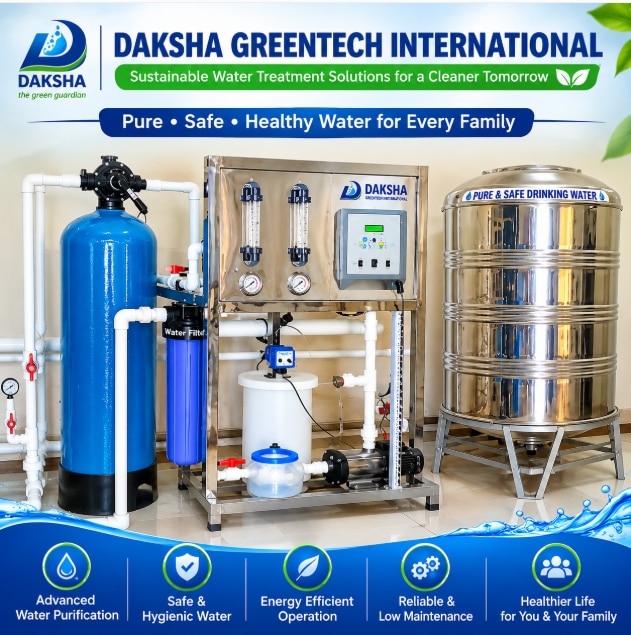 | RO Plant For Drinking Water DAKSHA GREENTECH INTERNATIONAL offers reliable RO Plants for Drinking Water, designed for consistent purification performance and efficient... View product → |
Frequently asked questions
What determines packaged drinking water plant cost in Bengaluru?
Production format, hourly capacity, treatment stages, filling and packing equipment, utilities, installation scope and site conditions determine the machinery-only planning cost.
What equipment should a packaged drinking water plant quote include?
A complete quote should identify pretreatment, filtration, disinfection, storage, bottle or pouch handling, rinsing, filling, capping, labelling, packing, utilities and commissioning items.
How does Bengaluru water source affect plant design?
Borewell, municipal and tanker water can differ in hardness, dissolved solids, iron, microbial load and seasonal quality. Test the source before selecting pretreatment and membrane capacity.
Which approvals and records should a packaged water plant maintain?
Check the applicable FSSAI licence, BIS requirements for packaged drinking water, source-water permissions, local operating approvals, test reports, batch records, cleaning logs and calibration records.
Related products
 | Packaged Sewage Treatment Plant Packaged Sewage Treatment Plant DAKSHA GREENTECH INTERNATIONAL is a reliable Manufacturer, Supplier, and Trader of Packaged Sewage Treatment Plants, offering compact and efficient... View product → |
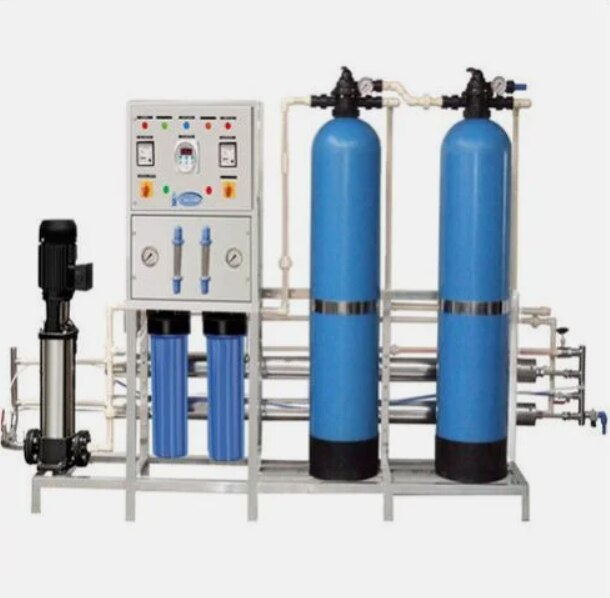 | Industrial RO Plant The Industrial RO Plant is a high-performance water purification system designed to remove dissolved salts, impurities, suspended contaminants, and... View product → |
Keywords