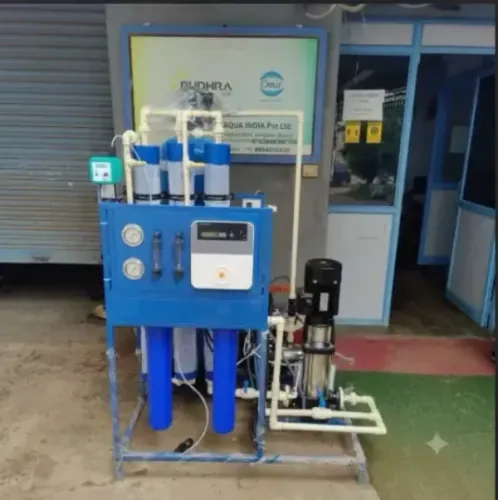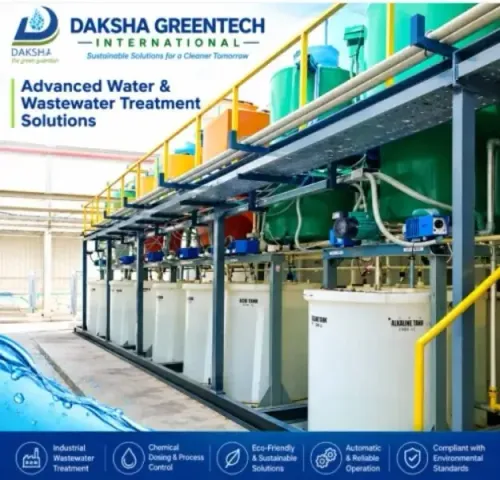
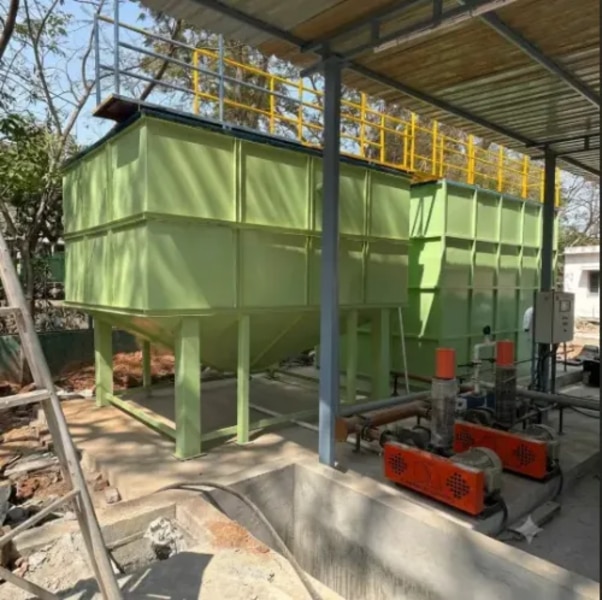
A packaged water facility does not produce one uniform wastewater stream: RO reject, bottle-rinse water, cleaning chemicals, floor washdown, filter backwash, and toilet sewage behave differently. By tracing each stream through testing, equalisation, treatment, reuse, and disposal, you can choose a plant that protects biological treatment, controls salts, and meets the receiving authority’s conditions.
Key takeaways
- Separate RO reject, process wash water, and chemical-cleaning waste before treatment.
- Test flow, pH, TDS, COD, BOD, and suspended solids before sizing equipment.
- Arrange screening, equalisation, biological treatment, clarification, filtration, and disinfection in order.
- Define reuse quality, sludge disposal, monitoring, and maintenance before commissioning.
Map every wastewater stream before choosing treatment
A packaged water facility should map each drain before it sends wastewater to a common tank; packaged drinking water wastewater is not one uniform stream. Combining high-TDS reverse-osmosis reject with chemical-cleaning waste can hide the problem and create a treatment plant that suits neither.
| Stream | Separate collection point | Main concern |
|---|---|---|
| RO reject or concentrate | Dedicated line or tank | High TDS and conductivity; biological treatment will not remove dissolved salts |
| Filter backwash | Solids collection or equalization | Suspended solids and short-duration flow |
| Bottle and container washing | Process-waste line | Product residue, labels, detergents, oil, and suspended solids |
| Chemical cleaning or CIP | Chemical-hold tank | Extreme pH, disinfectants, detergents, and shock loading |
| Floor washdown | Process-drain network | Soil, product spills, lubricants, and variable solids |
| Laboratory drains | Controlled collection | Acids, alkalis, stains, and small chemical volumes |
| Toilets and handwashing | Separate domestic-sewage line | Pathogens and domestic organic load |
Keep domestic sewage separate from process wastewater until you confirm the treatment design accepts both. Send compatible process streams to an equalization tank with mixing and controlled pumping; this prevents a backwash surge or CIP slug from reaching pH correction, biological treatment, membranes, or disinfection.
Hold concentrated chemicals for neutralisation or authorised disposal rather than diluting them blindly. Measure flow, pH, conductivity, TSS, BOD, COD, oil and grease, and cleaning-chemical loads for each stream before selecting coagulation, flotation, biological treatment, or a dissolved-solids solution.
Follow the wastewater treatment plant stages in operating order
Route bottle rinsing, equipment and floor-washing water, filter backwash, RO reject, cleaning chemicals, oils, lubricants, and domestic sewage according to their loads. The bottled water plant wastewater process then follows these wastewater treatment plant stages:
1. Screening removes labels, plastic pieces, caps, and coarse solids before pumps and tanks clog.
2. Collection and equalisation combine compatible streams in a mixed tank. Controlled pumping absorbs intermittent bottle washing, membrane backwash, and CIP discharges instead of sending hydraulic or chemical shocks downstream.
3. pH correction brings the blended flow into the operating range for biological treatment, membranes, and discharge. Check cleaning chemicals before dosing acid or alkali.
4. Coagulation and flocculation, when testing shows excess suspended solids, labels, oils, or organic residues, form settleable or floatable flocs.
5. Primary clarification or dissolved-air flotation removes those solids and concentrated oils. Send the separated sludge to controlled storage.
6. Biological treatment reduces biodegradable BOD and COD from residues and cleaning wash water. It does not remove RO concentrate’s dissolved salts, hardness, or conductivity; segregate that stream for recovery, further membrane treatment, evaporation, or approved disposal.
7. Secondary clarification or membrane separation removes biological solids.
8. Tertiary polishing targets remaining fine solids, colour, nutrients, or dissolved contaminants required by the reuse specification.
9. Disinfection controls microorganisms before reuse or discharge.
10. Store treated water in a covered, labelled tank with separate outlets for approved uses such as toilet flushing, gardening, or floor washing. Do not return it to product-water service without validated potable treatment and quality controls.
Size the plant and select the biological process from actual data
The question “how does a wastewater treatment plant for work in a packaged water facility” is answered by a mass balance, not by production capacity alone. Record hourly and daily flow, peak flow, and wastewater volumes from bottle washing, backwash, cleaning, domestic sewage, and RO reject across representative production and cleaning cycles.
1. Measure pH, conductivity or TDS, turbidity, TSS, BOD, COD, oil and grease, residual disinfectant, cleaning chemicals, and product-specific contaminants. Convert each result into pollutant load: flow in cubic metres per day multiplied by concentration in milligrams per litre, divided by 1,000.
2. Size equalization for intermittent backwash, bottle washing, and CIP discharges, then size pumps and treatment units for the measured peak flow. Mixing and controlled pumping prevent a short chemical or hydraulic shock from reaching biological treatment, membranes, or disinfection.
3. Set capacity from the reuse balance: treated-water demand, storage volume, discharge window, sewer limit, and dry-season supply. Treat RO concentrate as a separate design stream; biological treatment does not remove dissolved salts, hardness, or conductivity.
| Option | Operating characteristic | Select it when |
|---|---|---|
| MBBR | Continuous, load-tolerant, simpler operation | Flow and loading vary, with space for clarification |
| SBR | Timed biological treatment and settling in batches | Equalization and dependable cycle control are available |
| MBR | Compact process with low-solids effluent | Reuse demands high clarity and you accept fouling, cleaning, energy, and membrane replacement costs |
Confirm both Karnataka State Pollution Control Board effluent conditions and Bengaluru Water Supply and Sewerage Board sewer limits for flow, pH, conductivity, chemicals, and discharge timing before final sizing.
Control reuse, sludge, and daily operation after commissioning
Do not label all outlet water “treated water.” Assign each reuse route a risk class, then set acceptance limits for microbiology, residual disinfectant, turbidity, TDS, pH, and any chemical specific to that use.
Toilet flushing, gardening, cooling-tower makeup, and floor washing need separate approval and monitoring; never return this effluent to product-water service without validated potable treatment and a potable-water quality system.
- Keep treated-water tanks covered, labelled “non-potable,” and protected from cross-connections. Use dedicated pipes, backflow prevention, warning signs, and a defined overflow route.
- Match disinfection to the route: chlorination supplies a measurable residual, UV needs low turbidity and reliable lamps, and ozone demands extra equipment, energy, and safety controls. None replaces solids removal.
- Measure flow, pH, conductivity, turbidity, TSS, COD, BOD, residual chlorine, and reuse-quality indicators at scheduled points. Test after cleaning events and when the plant receives a shock load.
- Inspect screens, pumps, blowers, mixers, clarifier sludge blankets, membranes, UV lamps, chemical dosing lines, and alarms. Record runtimes, pressure, cleaning, calibration, failures, and replaced media.
- Thicken, dewater, label, and store sludge on an impermeable surface under cover. Use an authorised disposal route and retain manifests; never discharge sludge or washings into a storm drain.
Use equalization and controlled pumping to prevent bottle-washing, backwash, or CIP peaks from damaging biology, membranes, or disinfection. Keep a daily log linking inlet conditions, treated-water results, sludge removal, bypasses, tanker movements, and corrective action. Review trends weekly, not only individual pass/fail results.
Make the Bengaluru design and procurement decision defensible
A packaged wastewater treatment plant in Bengaluru suits a facility with measured, manageable flows, limited space, and wastewater that can be equalised before treatment. It is not a substitute for characterising RO reject, CIP waste, bottle-washing water, floor washdown, laboratory drains, and domestic sewage separately.
Before purchase, demand a signed design and compliance file:
- A water and pollutant mass balance covering hourly flow, daily flow, peak flow, pH, conductivity/TDS, turbidity, TSS, BOD, COD, oil and grease, residual disinfectant, cleaning chemicals, and product-specific contaminants.
- A process-flow diagram, piping and instrumentation diagram, hydraulic profile, tank volumes, equipment datasheets, electrical load schedule, civil-foundation drawings, and a sludge-handling plan.
- Performance guarantees stating treated-water limits, sampling points, test methods, commissioning conditions, membrane or biological-process assumptions, and remedies for failure.
- Karnataka State Pollution Control Board consent conditions and effluent limits, plus Bengaluru Water Supply and Sewerage Board acceptance for sewer connection, flow, pH, conductivity, chemicals, and discharge timing.
- An operation and maintenance manual listing chemical doses, calibration intervals, spare parts, operator tasks, emergency bypass controls, records, and disposal routes.
A packaged plant needs an ETP when process wastewater contains high TDS, cleaning chemicals, oils, or variable-strength loads; a domestic STP alone will not reliably treat them. Keep sewage separate. For concentrated RO reject, ask for recovery, controlled disposal, or a high-TDS solution such as evaporation or ZLD where required.
Daksha Greentech International should be evaluated against this evidence, not its catalogue description.
Related products
 | Packaged Sewage Treatment Plant Packaged Sewage Treatment Plant DAKSHA GREENTECH INTERNATIONAL is a reliable Manufacturer, Supplier, and Trader of Packaged Sewage Treatment Plants, offering compact and efficient... View product → |
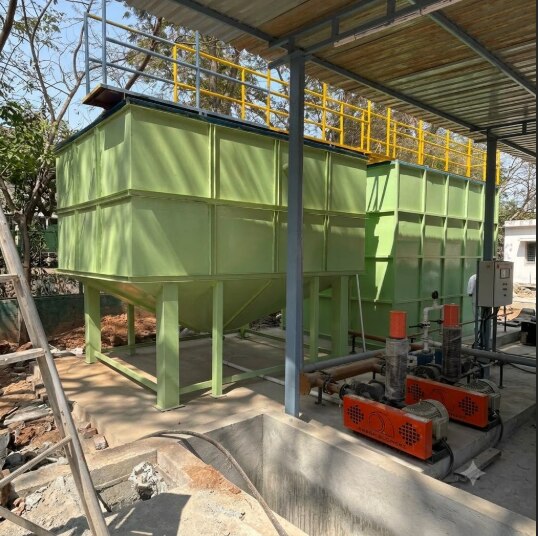 | Wastewater Treatment Plant DAKSHA GREENTECH INTERNATIONAL designs and supplies wastewater treatment solutions with a focus on efficient operation, durability, easy maintenance,... View product → |
Frequently asked questions
What wastewater streams should a packaged water facility map first?
Map reverse-osmosis reject, filter backwash, bottle and floor-wash water, chemical-cleaning waste, laboratory drains, and domestic sewage separately before combining compatible streams.
What are the main wastewater treatment plant stages?
The operating sequence normally includes screening, equalisation, pH adjustment, biological treatment, clarification, filtration, disinfection, and sludge handling, with the final arrangement based on test results.
How do you size a wastewater treatment plant for a packaged water facility?
Use measured daily flow, peak flow, pH, TDS, COD, BOD, suspended solids, temperature, and cleaning-chemical loads rather than production capacity alone.
What must be controlled after commissioning?
Set reuse or discharge limits, monitor flow and treatment performance, remove sludge on schedule, maintain pumps and aeration, and keep operating records for review and compliance.
Related products
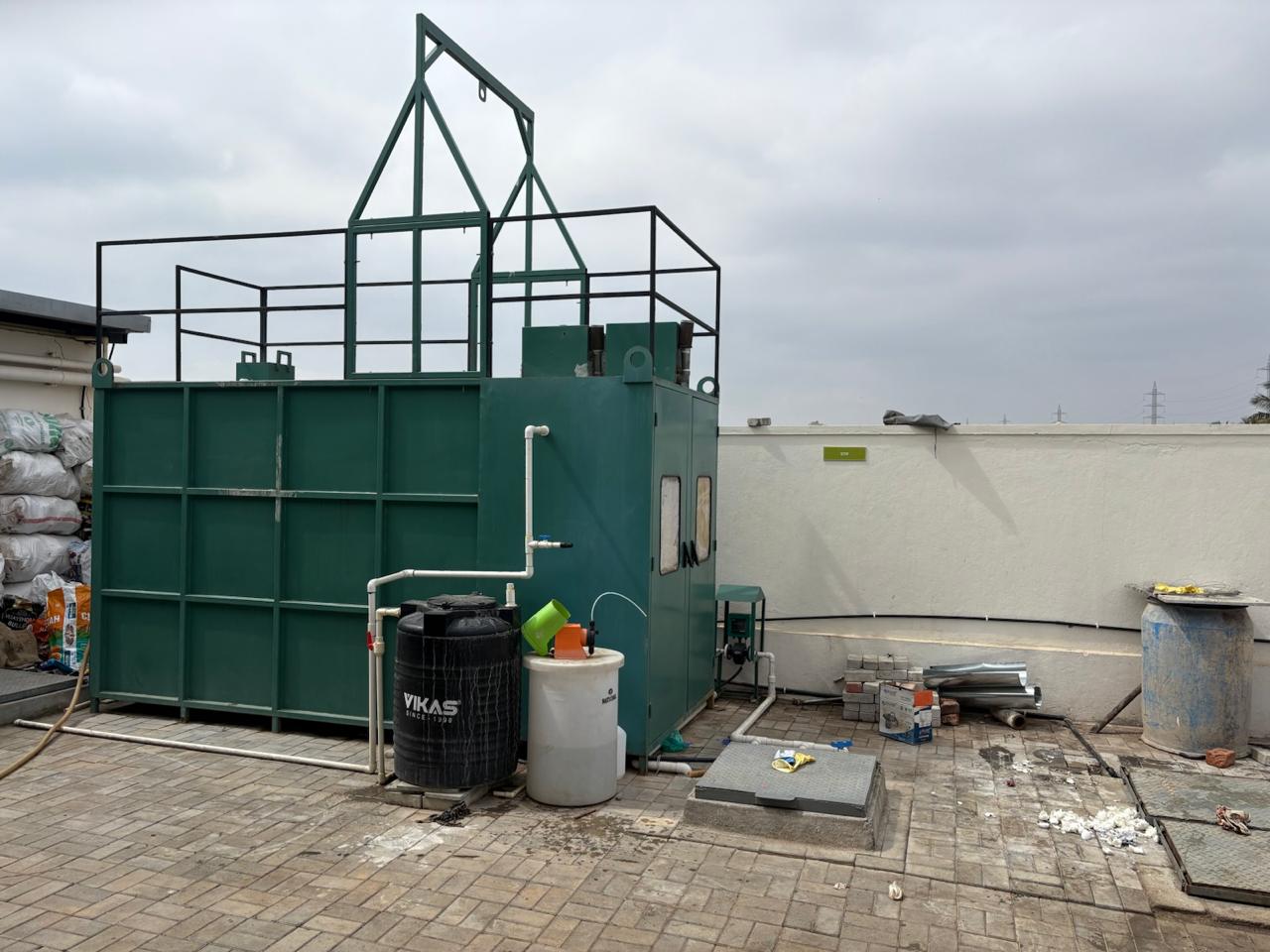 | MBR Sewage Treatment Plant The MBR Sewage Treatment Plant (Membrane Bioreactor) is an advanced wastewater treatment system designed to efficiently treat domestic and municipal... View product → |
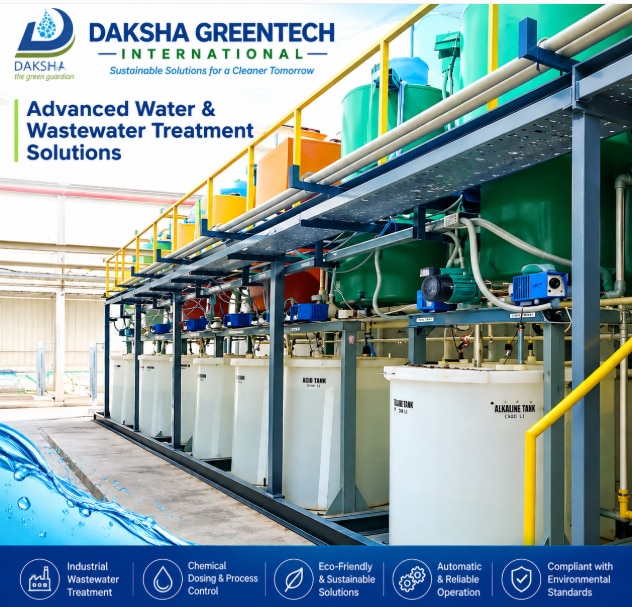 | Effluent Treatment Plant The Effluent Treatment Plant (ETP) is an advanced wastewater treatment solution designed to treat industrial effluents and reduce unwanted... View product → |
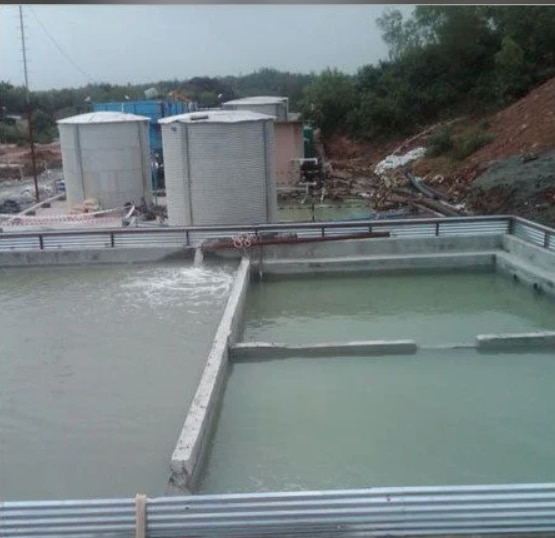 | Industrial Effluent Treatment Plant Industrial Effluent Treatment Plant DAKSHA GREENTECH INTERNATIONAL is a trusted Manufacturer and Supplier of Industrial Effluent Treatment Plants, designed to provide efficient,... View product → |
Keywords