Choosing a UF plant by its catalogue flow can leave you short of water during peak demand or paying for idle membrane area. You will be able to calculate practical capacity, compare configurations, match pretreatment to your feed water, and specify a system that remains productive during cleaning and maintenance.
Key takeaways
- Size UF capacity from peak flow, operating hours, recovery, and daily permeate.
- Calculate 800 m³/day feed for 600 m³/day permeate at 75% recovery.
- Compare skid layouts, membrane configurations, automation, and cleaning access.
- Specify pretreatment, recovery limits, backwash, chemical cleaning, and safeguards before purchase.
Calculate UF capacity from demand, not the catalogue rating
Size an ultrafiltration unit capacity from your duty profile: average flow, peak hourly flow, operating hours, required daily permeate and target recovery. Use these relationships: permeate flow = feed flow × recovery; feed flow = permeate flow ÷ recovery. If you need 600 m³/day at 75% recovery, feed flow is 800 m³/day.
Do not confuse units: 1 m³/h equals 1,000 L/h, while 1 m³/day equals 1 KLD. A unit rated at 100 m³/h produces 2,400 m³/day only if it runs continuously. Backwash, chemically enhanced backwash, cleaning and standby capacity reduce net output.
| Capacity term | Meaning | Use when comparing quotations |
|---|---|---|
| Nominal or gross | Advertised membrane production | Initial screening only |
| Peak | Short-duration maximum flow | Check valve, pump and storage limits |
| Net | Saleable permeate after losses | Size daily production |
| Guaranteed continuous | Contracted output at stated conditions | Base the purchase decision on this figure |
Calculate membrane area as net permeate flow ÷ net design flux. Use the supplier’s validated flux for your feed, not a generic figure, then correct for temperature, membrane aging, cleaning downtime and N+1 standby. Parallel trains provide turndown and let you clean one train while others operate.
Match the duty: hotels combine occupancy and laundry peaks; hospitals need dependable parallel trains; schools have seasonal schedules; factories and batch processes need timed production; cooling-tower and boiler make-up are intermittent; commercial buildings vary by occupancy. Storage or multiple trains prevent a short peak from leaving an oversized unit underloaded all day.
That is how you decide which ultrafiltration unit is right for my facility.
Compare commercial UF system layouts and membrane options
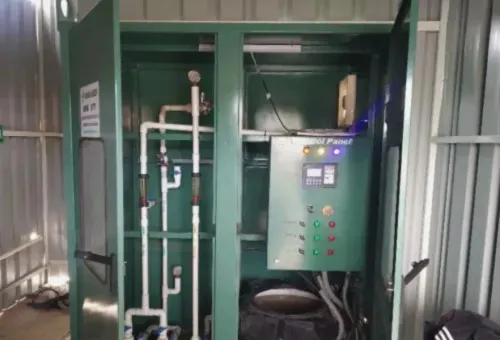
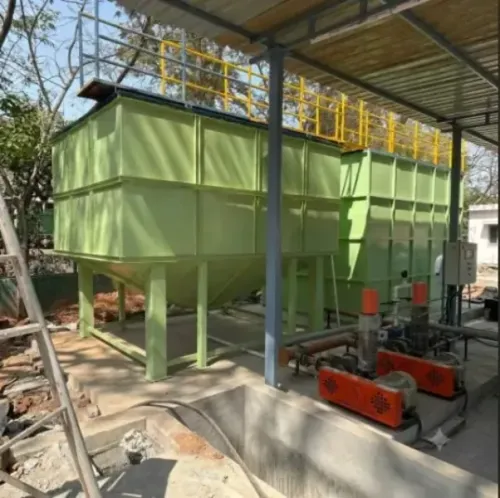
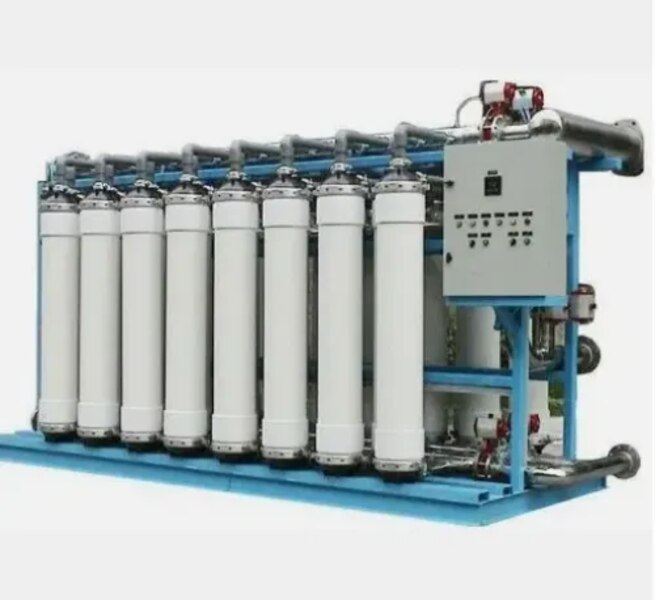
A skid-mounted system suits an indoor plant room: pipework, valves and membranes remain accessible for inspection. A containerised system simplifies outdoor installation, but check ventilation, summer heat, chemical storage, drainage and clearance for module removal. Pressurised hollow fibres run inside-out or outside-in; confirm which surface receives feed and how solids are removed.
Immersed UF needs the right tank arrangement and continuous air scouring.
| Module | Solids tolerance | Packing density | Pumping and pretreatment |
|---|---|---|---|
| Hollow-fibre | Low to moderate | High | Lower pumping; screening and reliable backwash |
| Tubular | High, including viscous feeds | Low | Higher pumping; coarse screening and solids control |
| Flat-sheet | Moderate to high in immersed cassettes | Moderate | Air scour; tank space and solids removal |
| Spiral-wound | Low | High | Lower pumping; finest pretreatment and fouling control |
Dead-end operation saves water on relatively clean feeds, but relies on periodic backwash and chemical cleaning. Crossflow handles higher solids with greater energy use and produces a continuous concentrate stream.
Automatic backwash adds actuated valves, flow and pressure instruments, alarms and fault response; manual backwash costs less initially but increases operator workload and delays recovery after a valve or pump failure. Compare single-pass and staged designs, then use parallel trains when demand varies, one train must be cleaned online, or N+1 availability matters.
- Minimum stable flow and maximum turndown
- Flow with one train offline
- Start-up water quality and validated flux
- Backwash volume, concentrate flow and cleaning sequence
- Automatic isolation and failure alarms
Match pretreatment and treatment targets to the feed water
A reliable UF unit starts with a feed-water profile, not a catalogue flow rate. Test these parameters on representative samples, including seasonal samples where source quality changes:
- Turbidity and total suspended solids
- Silt Density Index (SDI)
- pH, temperature and alkalinity
- Hardness
- Oil and grease
- Iron and manganese
- Residual disinfectant
- Microbial load
- Conductivity and TDS
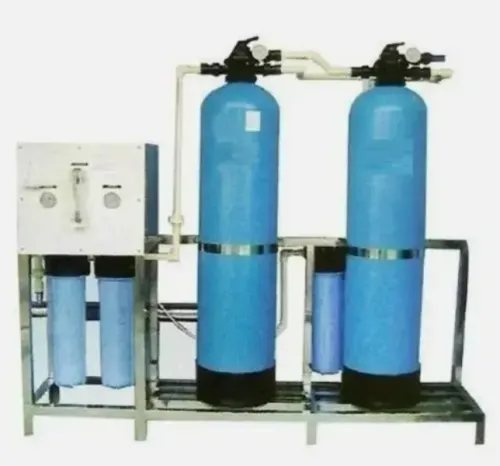
Use coarse screening for hair, fibres and plastics. Add strainers or cartridge filters when finer protection is needed, especially for spiral-wound modules. Coagulation and clarification suit colloids or high turbidity; softening protects downstream equipment from hardness, while RO pretreatment needs antiscalant control and an RO-compatible SDI guarantee.
Oil, algae, iron oxidation products, coagulant carryover and biological growth can foul membranes even when the calculated membrane area looks adequate. A UF unit for industrial water fails early when pretreatment removes particles but leaves these foulants.
UF is a particulate and microbiological barrier, not desalination. It generally does not remove the following targets:
| Target | Better-fit process | Reason |
|---|---|---|
| Dissolved salts, chloride, TDS | Reverse osmosis | Desalination |
| Hardness | Ion exchange or nanofiltration | Dissolved-ion removal |
| Nitrate or fluoride | Ion exchange or reverse osmosis | Selective dissolved-ion removal |
| Pesticides or low-molecular-weight organics | Activated carbon | Adsorption |
| Severe scaling or oxidation risk | Chemical treatment | Feed conditioning |
For potable water, require integrity testing, validated challenge performance, a stated virus-removal claim and a disinfectant residual. Never assume every UF membrane is a complete disinfection barrier.
Specify cleaning, recovery and operating safeguards before purchase
A UF specification must show net permeate, not just gross membrane flow. Require automatic trends for transmembrane pressure, feed and permeate turbidity, differential pressure, flow, temperature-corrected permeability, backwash performance and membrane integrity. Include alarms for abnormal pressure, turbidity breakthrough, failed valves and unsuccessful backwash.
- Set a feed-specific cleaning trigger before purchase. Use a sustained 10–20% fall in normalized permeability as a starting point, then validate it against the feed and membrane; waiting for severe flow loss makes chemical recovery harder.
- Separate routine backwash, chemically enhanced backwash and clean-in-place cleaning. Request each chemical’s concentration, contact time, temperature limit, rinse volume, neutralisation method and safe disposal instruction. State the expected frequency and downtime for each cycle.
- Require a water-and-solids mass balance covering permeate, routine and chemical backwash, CIP waste and any continuous concentrate. Recovery depends on solids in these streams, including coagulant sludge, oil and biological solids; a high catalogue recovery is not a waste-disposal plan.
- Specify membrane replacement intervals, compatible spare modules, valve and instrument checks, leak inspection and abnormal-pressure checks. Document the safe operating response when automation fails, because manual operation can cause overpressure, fouling or untreated water release.
- Make the guarantee state feed conditions, temperature, recovery, net flow, cleaning frequency, turbidity or SDI limit and permeate-quality limits. Include membrane-integrity test limits, not merely a pore-size claim.
This converts an attractive nominal rating into a maintainable lifecycle duty.
Choose the right size for your facility and site conditions
The right unit is the one that matches your duty cycle, feed risk and available site infrastructure—not the largest catalogue flow. Ask which ultrafiltration unit is right for my facility only after mapping these requirements:
| Facility | Selection priority | What to specify |
|---|---|---|
| Commercial building | Variable occupancy | Wide turndown and storage for low-demand periods |
| Hotel | Morning and laundry peaks | Modular trains or permeate storage |
| Hospital | Continuity and quality records | Parallel trains, N+1 standby and documented permeate quality |
| School | Simplicity and seasonality | Simple controls, safe chemical handling and seasonal scheduling |
| Factory | Batch timing and feed variability | Process-specific pretreatment and batch-compatible operation |
| Reuse plant | Waste and fouling control | Solids and biological-load data plus reject-disposal capacity |
For a UF unit for industrial water, require pilot results or credible historical operating data when feed is oily, biologically active, highly turbid or destined for RO. A clean-water catalogue rating will not predict cleaning frequency or continuous output.
For an ultrafiltration unit in Bengaluru, test municipal, borewell, tanker and treated-wastewater sources separately. Use dry-season and monsoon samples where those conditions change turbidity, organics or microbial loading. A Bengaluru UF system cannot reduce borewell TDS; add RO or another desalination process.
Confirm these site conditions before approving the layout:
- Power quality, floor loading and access for module replacement
- Chemical storage, ventilation and CIP space
- An approved route for backwash and cleaning waste
Give Daksha Greentech International the duty profile and test results, then request a configuration, net-capacity guarantee, pretreatment schedule, controls list, waste balance and maintenance plan—not a catalogue rating alone.
Related product
 | Ultrafiltration Unit The Ultrafiltration Unit is an advanced membrane-based water treatment system designed to remove suspended solids, colloids, microorganisms, and... View product → |
Frequently asked questions
How do you calculate ultrafiltration unit capacity?
Calculate required feed flow by dividing permeate flow by recovery. For 600 m³/day permeate at 75% recovery, feed flow is 800 m³/day. Check the design against peak hourly demand and operating hours.
Which commercial ultrafiltration system layout is right for a facility?
Compare single-train and multi-train layouts, skid footprint, membrane configuration, standby capacity, automation, maintenance access, and expansion space. Multi-train systems keep part of the plant operating during service.
What pretreatment does an UF unit for industrial water need?
Match pretreatment to the feed water. Screen debris, control turbidity and suspended solids, and address oil, hardness, iron, manganese, biological growth, and chemicals that could foul or damage the membranes.
What should you specify before buying an ultrafiltration unit?
Specify feed and permeate flow, recovery, operating hours, membrane material, filtration mode, backwash frequency, chemical cleaning procedure, allowable transmembrane pressure, alarms, automatic shutdowns, and cleaning chemical storage.
Keywords