A useful supplier comparison starts with water analysis, demand calculations and a defined treatment train—not a headline litre-per-hour figure. By the end, you can estimate the drinking-water RO plant cost, compare commercial quotations on equal terms and test whether a Bengaluru supplier can support the system after installation.
Key takeaways
- Choose capacity from peak demand, source-water analysis and operating hours.
- Compare complete RO trains, not membrane capacity alone.
- Request itemised pricing for pretreatment, membranes, tanks, controls and commissioning.
- Verify drinking-water safety documents, licence records and commissioning test results.
Choose the right RO system for your Bengaluru demand
Choose by duty, not headline LPH: a domestic purifier serves intermittent point-of-use drinking, a commercial RO system in Bengaluru serves a defined group, and an industrial RO plant supports sustained production or institutional demand.
| Option | Choose it when | What it needs |
|---|---|---|
| Domestic purifier | One home, small office or limited daily use | Under-sink or wall-mounted unit, storage tank, basic pretreatment and regular filter changes |
| Commercial RO system | Apartment amenities, schools, clinics, restaurants or offices needing roughly 25–1,000 LPH | Raw-water tank, treated-water tank, duty-cycle calculation, pressure controls, pretreatment and service access |
| Industrial RO plant | Factories, hospitals, hotels or campuses requiring thousands of litres per hour or continuous supply | Water analysis, engineered pretreatment, multiple membranes, automation, reject management, cleaning provisions and operator support |
Do not choose a commercial unit merely because the domestic purifier cannot keep up. Calculate daily drinking demand, operating hours, storage and peak draw; a 100 LPH nameplate will not deliver that rate if feed temperature, pressure or fouling reduces actual permeate flow. Size industrial equipment around production schedules and consequences of downtime.
Test Bengaluru borewell or municipal feed water before accepting a quotation. Request TDS or conductivity, hardness, alkalinity, silica, iron, manganese, chloride, sulphate, turbidity and microbiology results. Hardness and silica drive scaling, iron and manganese foul membranes, and turbidity blocks cartridges; high TDS alone does not identify the treatment train.
Choose the larger system only when demand, water quality and reject-handling requirements justify it.
Size the plant from demand, water analysis and operating conditions
Required capacity equals daily treated-water demand divided by planned operating hours, then increased for peak draw and operating losses. Calculate demand as users × litres per person per day. For example, 200 users consuming 5 litres each need 1,000 litres daily; over 10 operating hours, the base requirement is 100 LPH.
That 100 LPH figure is not the purchase size. Apply a peak-demand factor if people fill containers together, or use treated-water storage to cover short surges. Storage reduces the instantaneous load, but it does not reduce daily production. Size raw-water storage for supply interruptions and treated-water storage for the period when demand exceeds RO output.
Allow capacity for membrane fouling, feed-temperature effects, pressure variation, backwash water, cleaning downtime and maintenance. A membrane rated at 500 LPH may deliver less at the site’s actual feed temperature and pressure, so require the supplier to state guaranteed permeate flow under your conditions.
Do not size a commercial RO system in Bengaluru from user count alone. Confirm the analysis before selecting membrane area and pretreatment:
- Feed TDS, hardness, alkalinity and silica
- Iron, manganese and turbidity
- Feed temperature and pressure
- Required permeate quality and recovery target
- Daily operating hours and storage volume
For a small facility, compare the calculated duty with 25, 50 or 100 LPH units; intermittent demand suits storage-backed operation, while continuous high demand requires a larger plant. Record feed flow, permeate flow, recovery and conductivity during commissioning, not just the nameplate capacity.
What a complete drinking-water RO train should include
A low TDS reading at the membrane outlet does not prove safe drinking water. Post-treatment can change pH, mineral content and microbiological quality, so specify both membrane permeate quality and final drinking-water outlet quality.
| Stage | Components | When necessary |
|---|---|---|
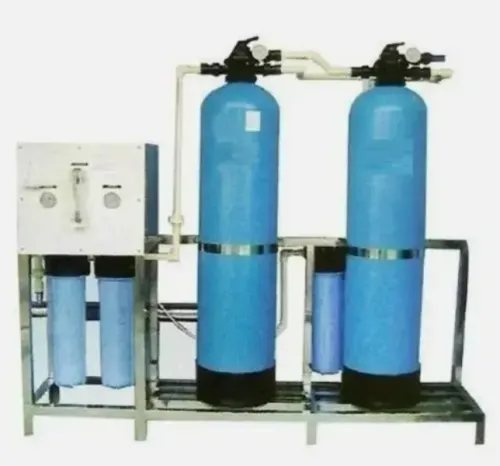
| Pretreatment | Raw-water tank, multimedia filter, activated-carbon filter, iron/manganese removal, softener or antiscalant dosing, and a 5-micron cartridge filter | Select from laboratory results: turbidity needs media filtration; chlorine or organic compounds need carbon; iron, manganese, hardness or scale risk need dedicated control |
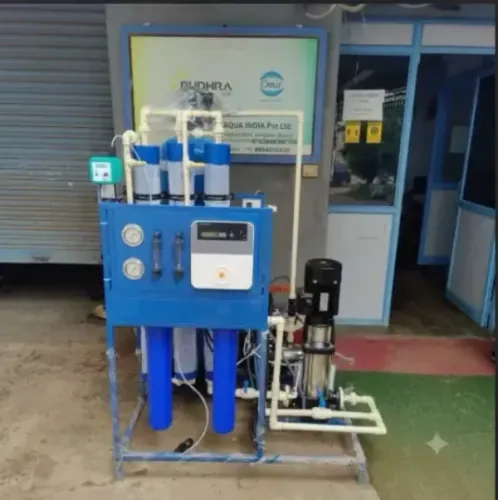
| RO | Feed pump, high-pressure pump, membrane vessels, brackish-water membranes, flow and pressure gauges, conductivity monitoring, automatic flush and low-pressure protection | Required when dissolved salts exceed the finished-water target; membrane area and recovery depend on TDS, temperature and operating hours |
| Post-treatment | Remineralisation, pH correction, UV or final disinfection, treated-water tank and hygienic distribution pump | Add remineralisation or pH correction when RO water is too low in alkalinity or corrosive; add UV or final disinfection when storage or distribution creates microbiological risk |
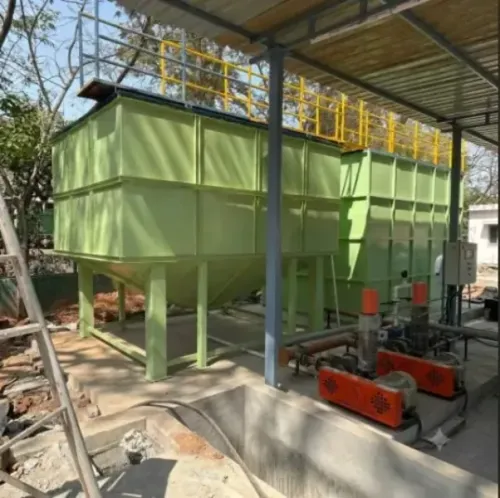
| Reject management | Reject flow control, drain or reuse line, collection tank and level controls | Provide reuse when the reject can serve flushing or gardening; otherwise confirm lawful drainage, evaporation or another disposal route before installation |
Ask a ro drinking water system supplier in bengaluru to show separate test points for membrane permeate and final outlet water. A complete quotation also names tank capacities, recovery percentage, cartridge size, electrical controls and reject destination; a catalogue skid omitting these items is not a complete train.
How to compare RO drinking water system price in Bengaluru
A complete, installed Bengaluru system falls into these planning bands; treat them as budget ranges, not firm offers.
| Capacity | Indicative installed price | Main comparison point |
|---|---|---|
| 25–50 LPH | ₹20,000–₹60,000 | Small commercial duty, basic pretreatment |
| 100–250 LPH | ₹45,000–₹1.25 lakh | Storage, duty cycle and pump selection |
| 500 LPH | ₹80,000–₹2 lakh | Membrane count, automation and tanks |
| 1,000 LPH | ₹1.5–₹3.5 lakh | Recovery, electrical work and pretreatment |
| 5,000 LPH | ₹5–₹12 lakh | Industrial piping, controls and reject handling |
Ask every supplier to price the same feed-water data: TDS, hardness, alkalinity, silica, iron, manganese, turbidity and temperature. State permeate quality at the membrane outlet and final drinking-water outlet, operating hours, recovery target, storage volume and required flow.
The RO drinking water system price rises with stainless-steel grade, membrane area, high-pressure pump size, automatic controls, cartridge filters, softener or antiscalant dosing, UV or ozone, remineralisation, tanks and reject-recovery equipment. A 500 LPH unit running 16 hours needs a different design from one running four hours daily.
Separate equipment, transportation, civil work, electrical cabling, piping, installation, GST and commissioning in the quotation. Daksha Greentech International can be asked to state each inclusion rather than presenting one combined figure.
Also calculate the drinking water RO plant cost after purchase: electricity, chemicals, filter cartridges, cleaning, membrane replacement, testing, operator time and reject disposal. A cheaper quote can cost more if reject water, storage or service visits are excluded.
Related products
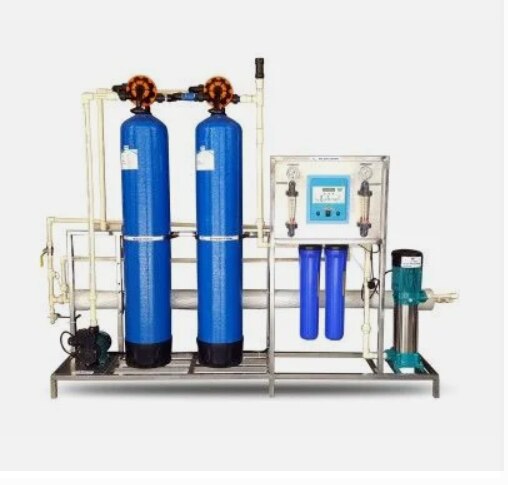 | RO Drinking Water System DAKSHA GREENTECH INTERNATIONAL offers reliable RO Drinking Water Systems designed for consistent purification performance and convenient operation. View product → |
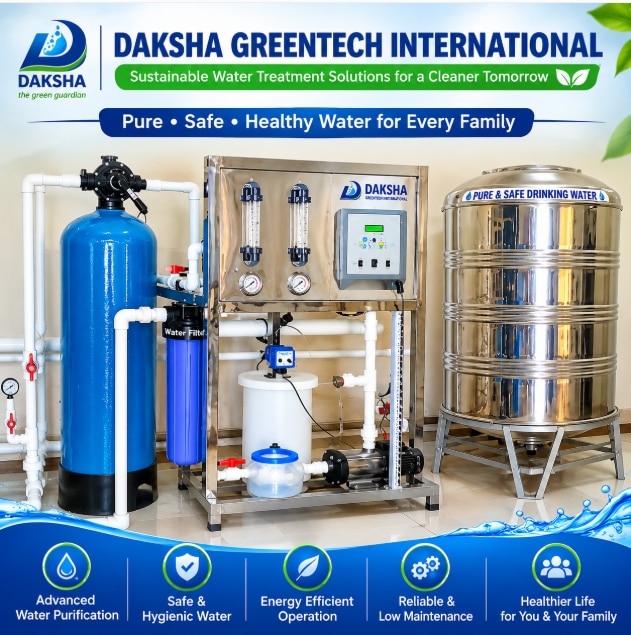 | RO Plant For Drinking Water DAKSHA GREENTECH INTERNATIONAL offers reliable RO Plants for Drinking Water, designed for consistent purification performance and efficient... View product → |
Check supplier capability, drinking-water safety and commissioning results
A credible ro water purification supplier in bengaluru starts with a site survey, not a catalogue capacity. Ask for the survey record showing raw-water analysis, feed flow and pressure, storage, drainage, electrical load, installation access and peak demand.
Verify the factory address, visit it if practical, and confirm whether fabrication, testing, installation and transportation are handled by the same supplier.
For an institutional plant, require written answers to these checks:
- Service territory, emergency response time and availability of membranes, cartridge filters, UV lamps and pumps
- Turnkey scope covering pretreatment, tanks, piping, electrical controls, civil work, commissioning and operator training
- Preventive-maintenance frequency, cleaning method, laboratory-testing schedule, exclusions, spare-part prices and service-level commitment
- Remote or on-site conductivity monitoring, alarm records and a named contact for breakdowns
- Separate permeate specifications at the membrane outlet and final drinking-water outlet
At commissioning, sign acceptance results only after checking feed pressure and flow, permeate flow, recovery, conductivity or TDS rejection, pump current, leaks and low-pressure, high-pressure, dry-run and tank-level interlocks. Record capacity at the agreed feed temperature and water conditions; the nameplate figure alone proves nothing.
For a residential buyer comparing an ro drinking water system supplier in bengaluru, distinguish an intermittent under-sink unit from a 25–100 LPH commercial system. Test finished water against IS 10500, including microbiology where applicable: low membrane TDS is an operating indicator, not proof of safe drinking water.
Frequently asked questions
How do you choose the right RO system for Bengaluru demand?
Match the system to use: a domestic purifier suits intermittent point-of-use drinking, a commercial RO system serves a defined group, and an industrial plant supports sustained production or institutional demand.
What information is needed to size a drinking-water RO plant?
Provide daily and peak water demand, operating hours, required treated-water volume, source-water analysis and conditions such as feed pressure, temperature and available space.
What should a complete drinking-water RO train include?
Check for feed and high-pressure pumps, pretreatment, cartridge filtration, RO membranes and housings, instruments, controls, treated-water storage, reject-water handling and post-treatment where required.
How should you compare RO drinking water system price in Bengaluru?
Compare itemised quotations that state capacity, recovery, membrane quantity, pretreatment, storage, electrical controls, installation, commissioning, consumables, warranties and taxes.
Related product
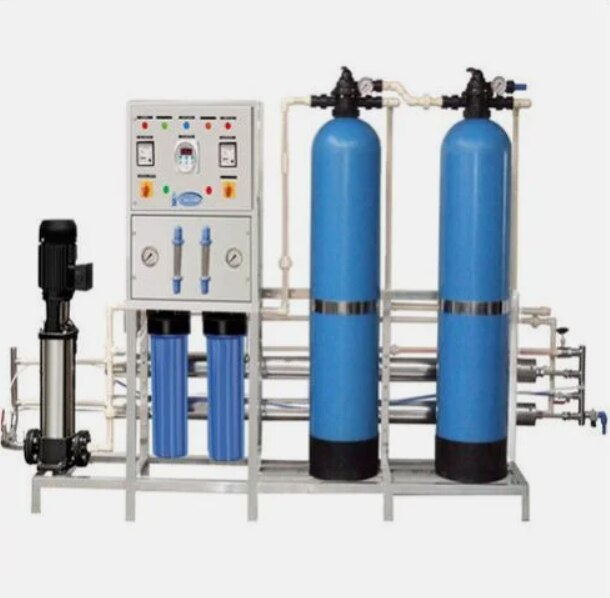 | Industrial RO Plant The Industrial RO Plant is a high-performance water purification system designed to remove dissolved salts, impurities, suspended contaminants, and... View product → |
Keywords