A successful bottled-water project in Bengaluru starts with the source, sales plan and compliance route—not with an off-the-shelf RO quotation. By the end, you will be able to define the treatment train, calculate usable production capacity, plan the premises and identify the approvals, testing and distribution controls required before launch.
Key takeaways
- Test and document the water source before selecting treatment equipment.
- Separate raw water, processing, filling and dispatch areas.
- Size production from daily sales, pack mix and reject-water volumes.
- Compare quotations by testing, compliance documents and after-sales support.
Validate the Water Source and Product Category Before Buying Equipment
Do not order a packaged drinking water plant for bottled water business in Bengaluru until the source is legally available, testable and suitable for the product category you intend to sell.
1. Test representative raw water through an accepted laboratory. Request microbiological results plus pH, turbidity, TDS, hardness, nitrate, fluoride, iron, arsenic, lead and other parameters required for IS 14543. Repeat sampling across seasons if the source is a borewell or tanker.
2. Select the category correctly. Treated water from civic supply, groundwater, surface water or a permitted tanker source is packaged drinking water under IS 14543. Natural mineral water falls under IS 13428 and requires qualifying source and compositional conditions; RO-treated borewell water cannot simply use that description.
3. Prove legal access before sizing equipment. For borewell water, check Central Ground Water Authority or Karnataka groundwater permissions, abstraction limits, aquifer restrictions and recharge conditions. A BWSSB connection or documented tanker supplier changes the approval route, not the need for source records.
4. Prepare the FoSCoS application with premises, process flow, equipment, source and product details, and the laboratory report. Confirm the current FSSAI testing scheme; do not assume a BIS mark is automatically the present legal prerequisite.
5. Obtain Karnataka State Pollution Control Board consents and document routes for RO reject, backwash, jar-washing wastewater and sewage. An unlined drain can invalidate an otherwise sound project.
Map the Treatment, Filling and Packing Process
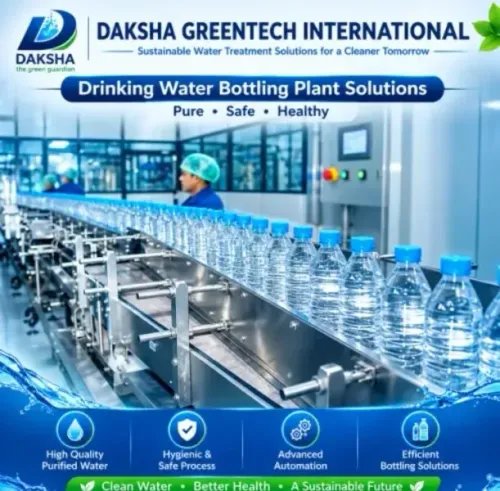
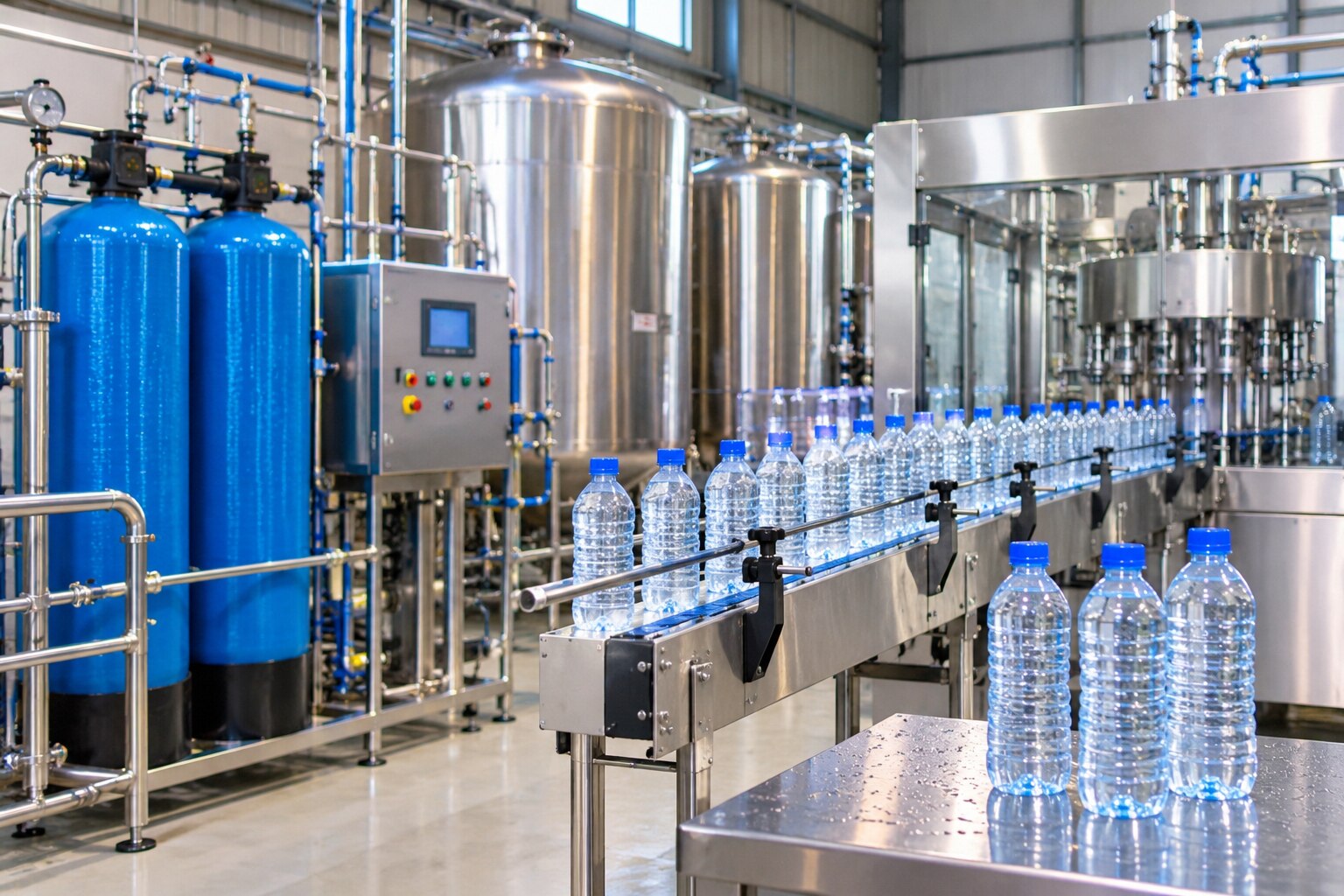
A bottled water plant setup in Bengaluru turns approved source water into a saleable pack through a controlled sequence, not a single RO machine. Keep raw water and treated water in separate tanks, pipes and handling areas.
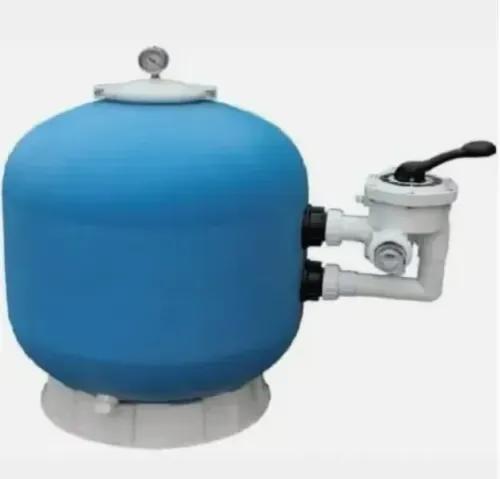
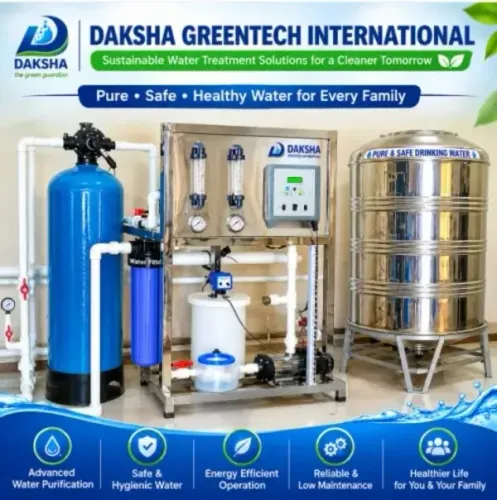
1. Pump source water into a raw-water tank, then pass it through a multimedia or sand filter, activated-carbon filter and micron cartridge. Add softening or iron removal when source analysis requires it.
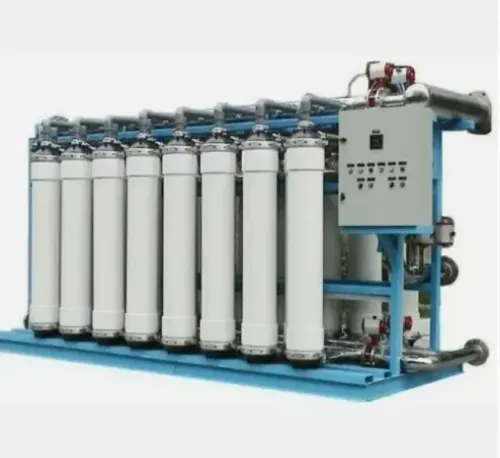
2. Feed pretreated water to an RO system when dissolved salts or other contaminants demand it. Send permeate to a closed treated-water tank, then disinfect it with ultraviolet light, ozone or both.
3. Rinse containers with treated water, then fill and cap them inside a hygienic filling room. For 20-litre jars, inspect returns first, reject cracked or permanently stained jars, and use external washing, detergent or caustic washing, rinsing and sanitisation before filling.
4. For PET, supply clean bottles or blow moulds from preforms, then apply caps, labels, batch codes and shrink film or cartons. Move finished packs to protected dispatch storage.
Include chemical-cleaning points, ozone safety controls, filter-change access and RO-reject routing in the layout. A clean membrane outlet does not protect water exposed during jar washing, cap handling or post-treatment storage.
Size the Plant From Sales, Pack Mix and Water Balance
Start with dispatch, not the membrane rating. If your plan is 12,000 litres of finished water per day and you can run the filler for eight productive hours, target 1,500 litres per hour. Productive hours exclude cleaning, changeovers, maintenance and breaks; add peak-day demand rather than sizing from an average month.
- Finished litres per hour = peak-day litres ÷ productive filling hours.
- Bottles per hour = litres per hour ÷ bottle size in litres. Calculate each pack separately: 1-litre PET, 500-ml PET and 20-litre jars consume different line time.
- Daily bottle capacity = planned litres ÷ pack size. Check the filler’s speed after the capper, labeller, shrink-wrapper and changeovers, not its advertised speed.
- When RO is installed, raw-water requirement = finished litres ÷ recovery, plus backwash, container washing and sanitation losses. At 70% recovery, 10,000 finished litres requires about 14,286 litres of RO feed before those additions; 4,286 litres becomes reject.
Size raw-water storage for supply interruptions, treated-water storage for filling interruptions, and finished-goods space for the dispatch interval. Twenty-litre jars also need clean-empty-jar racks, deposit control, returns and route sanitation; PET needs bottles or preforms, labels, packing material and protected dispatch space.
State reject volume and its approved treatment, reuse or disposal route in the quotation. For a drinking water plant for business in Bengaluru, distribution capacity can limit sales before treatment capacity does.
Design the Bengaluru Premises Around Hygiene and Dispatch
A suitable plot is paved, flood-safe, accessible to tankers and delivery vehicles, and separated from open drains, dust-generating industries, stagnant water and waste storage. These are core packaged water plant requirements in bengaluru.
- Site and rooms: Provide separate areas for raw-water receipt, returned-jar inspection, jar washing, filling and capping, labelling, finished-goods storage, staff changing and laboratory work. Keep the filling room physically separated from dirty-container handling.
- Hygiene surfaces: Use washable floors and walls, coved floor-to-wall joints, trapped drains, insect screens, hand-wash stations and controlled personnel entry. Do not route dirty jars through the clean filling area.
- Utilities: Size electrical supply, lighting, ventilation, compressed air and treated-water piping for peak production. Keep chemical storage locked and away from product and packaging materials.
- Storage: Store caps, labels and primary packaging in a clean, dry, covered room; keep finished cases and 20-litre jars off the floor and away from walls. Mark batches for first-in, first-out dispatch.
- Vehicle access: Provide a separate loading route or time-controlled movement for tankers, raw materials and finished goods. Trucks must not enter the hygienic filling zone, and loading areas need hard paving and drainage.
Leave enough turning space for the largest tanker and delivery vehicle you will actually use, not merely the smallest proposed truck.
Build the FSSAI, Testing, Label and Environmental Compliance File
A packaged drinking water plant for a bottled water business in Bengaluru needs an FSSAI licence through FoSCoS before sale. Submit the premises, process flow, equipment, source details, product information and water-analysis report from an accepted laboratory.
Source approval changes with the supply route:
| Source | Approval file | Check before construction |
|---|---|---|
| Borewell | Groundwater NOC from CGWA or the applicable Karnataka authority; KSPCB consent to establish | Aquifer status, permitted abstraction, recharge conditions and location restrictions |
| Municipal supply | Connection or supply records | Legal availability and consistent quantity |
| Water tanker | Supplier agreement and source documents | Traceable origin, testing and transport records |
Use IS 14543 for packaged drinking water, not IS 13428 for natural mineral water. Follow the current FSSAI testing scheme, including finished-water microbiological tests such as E. coli and coliforms and the specified chemical parameters. The BIS certification mark is not the automatic legal prerequisite after 1 October 2024; verify current rules and buyer contracts.
Before printing labels, approve product identity, net quantity, manufacturer or packer address, batch number, date, MRP where applicable, consumer-care details and FSSAI licence number/logo under FSSAI and Legal Metrology Packaged Commodities Rules.
Obtain KSPCB consent to operate and document treatment or disposal for RO reject, backwash, bottle-washing water, cleaning chemicals and sewage. Never discharge concentrated RO reject into an unlined drain.
Compare Plant Quotations Against Operations and Distribution Reality
A quotation is not credible if its only headline is litres per hour. Ask for saleable bottles or jars per shift after changeovers, rinsing, filling, capping, labelling, packing, maintenance stops and reject water; otherwise a large line can sit idle while dispatch becomes the constraint.
| Configuration | Compare in the quotation | Operational reality |
|---|---|---|
| Small PET line | Bottles per hour by pack size, operator count and changeover minutes | Suits local routes; storage and vehicle loading can limit growth before treatment capacity does |
| 20-litre jar line | Washed jars per hour, rejection rate, racks, deposits and return capacity | Reverse logistics, cracked jars, sanitation and route-level tracking become the hardest work |
| Larger mixed-pack line | Separate PET and jar outputs, shift utilisation and expansion cost | Avoid it until confirmed orders justify idle equipment, extra labour and warehouse space |
For a bottled water plant setup in Bengaluru, require the supplier to show the water balance: raw-water demand, RO recovery percentage, membrane reject, backwash, jar washing losses and disposal or reuse route. A 10,000-litre finished-water target does not mean a 10,000-litre raw-water connection.
Use the same test for a drinking water plant for business in Bengaluru: request equipment make and model, consumables, spare parts, cleaning procedure, training hours, warranty exclusions and service response time.
Daksha Greentech International can be asked to separate treatment capacity from filling and dispatch capacity, so you compare the operating system rather than a flattering skid rating.
Related product
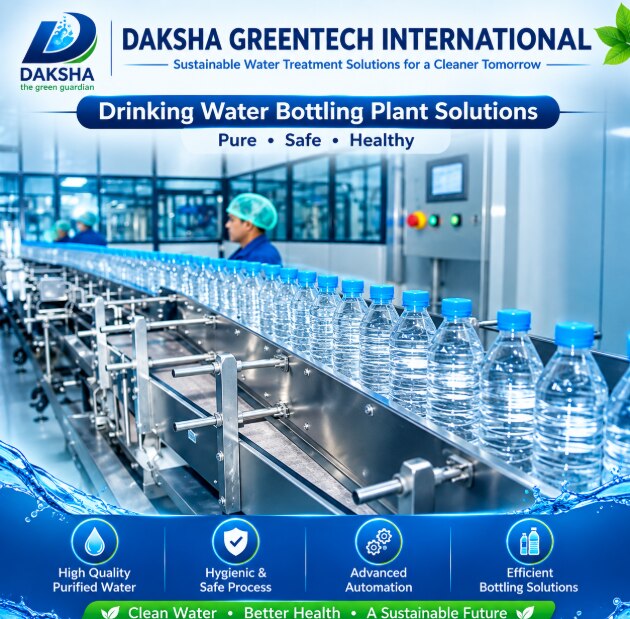 | Packaged Drinking Water Plant Our Packaged Drinking Water Plant is an efficient and reliable solution designed for the hygienic processing and packing of drinking water into... View product → |
Frequently asked questions
What should you verify before buying a packaged drinking water plant in Bengaluru?
Confirm legal access to the source, test raw water through a competent laboratory, and identify whether your product will be packaged drinking water or another category. Use the results to specify treatment stages instead of buying a generic plant.
How do you size a bottled water plant for a new business?
Start with forecast daily sales by pack size, operating hours, peak dispatch requirements and water losses. Include source water, treated-water demand, bottle rinsing, cleaning, reject water and storage capacity in the water balance.
What premises layout does a packaged water plant require?
Plan separate zones for raw-water receipt, treatment, treated-water storage, bottle or jar washing, filling and sealing, finished-goods storage, laboratory work, staff movement and vehicle dispatch. Control dust, drainage, pest entry and cross-contamination at each transition.
Which compliance records should a bottled water business maintain?
Build a file containing source test reports, process and product test results, FSSAI records, applicable licence documents, label artwork, batch coding details, sanitation logs, calibration records, pest-control records and environmental approvals or consents.
How should you compare packaged drinking water plant quotations?
Compare the guaranteed output, feed-water assumptions, recovery, reject-water volume, power demand, automation, included tanks and utilities, testing equipment, installation scope, operator training, warranty, spares and commissioning tests—not only the equipment price.
Keywords